Top Tens – Heroes & Villains: Top 10 Heroes & Villains of Mythology (8) Villain: Sphinx

The Sphinx as it appears in Dungeons & Dragons, featured on D & D Beyond, D & D’s 5th edition online resource


(8) CLASSICAL MYTHOLOGY – VILLAIN: SPHINX


What walks on four legs in the morning, two legs at noon, and three legs in the evening?

Yet another one of the beasts of classical mythology, albeit at least one with some human component.

It has far more name recognition in popular culture and imagination than other hybrid beasts of classical mythology such as the Chimera, primarily because it did not just feature in classical mythology but also in representations throughout the ancient Near East – particularly in Egypt and most famously the monumental statue of the Great Sphinx of Giza.

However, that does bring us to an important distinction for a Top 10 Heroes & Villains of Mythology. The sphinxes (or sphinges as that is the other plural form of sphinx) of the ancient Near East in general and Egypt in particular tended to be more heroic. In Egypt, the human component of the sphinx was “typically depicted as a man” – or androsphinx – “and is seen as a benevolent representation of strength and ferocity, usually of a pharaoh”.

The Egyptian sphinxes are so iconic, particularly the Great Sphinx of Giza, that they tend to influence the visual characteristics or depictions of all sphinxes since, whether in size or Egyptian headdress or other features – even when those sphinxes otherwise behave like evil or villainous Sphinx of classical mythology.

And yes – it is the Sphinx of classical mythology that was villainous. Whereas the Egyptian sphinxes were typically depicted as male, the Sphinx of classical mythology had the head of a woman – and interestingly, as opposed to the wingless Egyptian sphinxes, it also had the wings of an eagle.

The Sphinx of classical mythology was also the one that had its Riddle, which it effectively used as its murder weapon. Okay, okay – the Riddle itself wasn’t the weapon. The Sphinx itself would kill you, presumably with its lion claws although the fact that it ate its victims suggests it also had lion fangs, but after you failed to answer the Riddle which it posed to all who encountered it.

As such, the Riddle of the Sphinx tends to have “dire consequences for those who won’t or can’t guess correctly” – and for the Sphinx if you did, which is how the hero Oedipus killed it, whether by the Sphinx killing itself from some strange compulsion upon answering the riddle or Oedipus taking a more direct hand in slaying it.

“The Greek sphinx was a single one-of-a-kind monster and enemy of mankind sent as a plague by Hera to punish Thebes and was the one that asked the infamous riddle and was bested by Oedipus.”

While the Sphinx has not quite lent its name to a metaphorical term like the Chimera – or for that matter Oedipus thanks to Freud – its name is used to connote enigma or mystery.

“Sphinxes are enigmatic beings. Some are merely monsters with inscrutable motives, while others guide entire civilizations towards goals only they understand. No matter the world, a sphinx is a mystery given form.”


ELDRITCH ABOMINATION


Well yes, as a hybrid beast it ranks high as eldritch abomination – arguably its human aspects make it even more so.


FANTASY DARK LORD RANKING


Unlike the Hydra or Chimera, the Sphinx would actually rank well as potential fantasy dark lord, particularly if it could focus its intelligence or mysterious nature away from riddles.

“Sphinxes are typically associated with knowledge in some form… Associations with magical lore and oracular powers are also fairly common. They’re usually powerful, rare and magical beings; regardless of their specific role in a story, sphinxes are rarely trivial creatures.”


RATING:

A-TIER (TOP TIER)

Top Tens – Heroes & Villains: Top 10 Heroes & Villains of Mythology (8) Hero: Horus

Horus character profile in the Smite video game


(8) EGYPTIAN MYTHOLOGY – HERO: HORUS


“Look out Set, here I come Set

To get Set, to sunset Set

To unseat Set, to set down Set”


One of two deities from Egyptian mythology I rank as heroes in my top ten, Horus is the more conventionally heroic figure.

“God of kingship, healing, protection, the sun, and the sky. He was worshipped from at least the late prehistoric Egypt until the Ptolemaic Kingdom and Roman Egypt. Different forms of Horus are recorded in history…these various forms may be different manifestations of the same multi-layered deity…He was most often depicted as a falcon, most likely a lanner falcon or peregrine falcon, or as a man with a falcon head.”

Vengeful god Horus!

The best-known form of Horus is the son of Isis and Osiris on a roaring rampage of revenge against Set for killing his father Osiris.

Horus! The pharaoh’s champion!

While “the pharaoh was associated with many specific deities”, perhaps the most pharaonic deity was Horus, “who represented kingship itself and was seen as a protector of the pharaoh”.

Cosmic Horus! His right eye is the sun and his left eye is the moon.

No, seriously – “since Horus was said to be the sky, he was considered to also contain the Sun and Moon”.

Speaking of eyes, even his eye was heroic – “The Eye of Horus is an ancient Egyptian symbol of protection and royal power from deities…In the Egyptian language, the word for this symbol was “wedjat”


SUPERMAN-BATMAN SCALE

Like Egyptian gods in general, Horus is definitely on the divine Superman end of the scale, even to the point that they have remarkably similar origins as infant children saved from disaster by their parents for divine greatness – except for Horus, it’s his mother Isis that’s the literal equivalent of Superman’s rocket launching him to safety from Krypton’s destruction. Isis fled with Horus from Set and raised him up for his roaring rampage of revenge.


PUNCHING OUT CTHULHU RANKING

I don’t know about Cthulhu but he certainly ranks high in the punching out Set ranking.


PARTY ROCK RANKING

A little too serious to rank high in my party rock ranking but what do you expect from the Egyptian pantheon’s equivalent of Inigo Montoya – “you killed my father, prepare to die!”.

Also – you do NOT want him bringing the salad with his special sauce to barbecues…


RATING

A-TIER (TOP TIER)

Top Tens – Heroes & Villains: Top 10 Heroes & Villains of Mythology (9) Villain: Chimera

The Chimera as it appears in art for Dungeons & Dragons, featured in D & D Beyond, D & D’s 5th edition online resource


(9) CLASSICAL MYTHOLOGY – VILLAIN: CHIMERA


Like the Hydra in tenth place, the Chimera is one of many beasts that roam classical mythology.

So why does it rank in ninth place in my Top 10, above the other beasts of classical mythology, you might ask? At least the Hydra was killed by a god-tier hero like Heracles (as one of his twelve legendary Labors). The Chimera was killed by the hero Bellerophon, not exactly in the top rank of heroes for name recognition from classical mythology, although his steed Pegasus fares somewhat better.

Like the Hydra, there are a couple of reasons – indeed, pretty much the same reasons as for the Hydra. As one of the offspring of Typhon and Echidna, it was a particularly nasty beast.

And it was a particularly distinctive one – “a monstrous fire-breathing hybrid creature…composed of different animal parts. Typically, it is depicted as a lion with a goat’s head protruding from its back and a tail ending with a snake’s head. Some representations also include dragon’s wings.” In its adaptation in Dungeons and Dragons, the tail with snake’s head ends up as a dragon head and tail, making it a three-headed beast.

However, as usual the primary reason is for its thematic or metaphorical significance. Its very nature as a fantastic hybrid has lent its name as a term for any “imaginary monster composed on incongruous parts” – or even more so for any “illusion or fabrication of the mind”, typically of a haunting nature or that of a fever dream. The former has seen its use as a term in genetics for an organism, potentially including humans, with more than one genetically distinct cell populations within its body – or in other words, more than one genotype or DNA profile.

Again, it’s a metaphor with some real resonance in life – or at least my life, which at times I think had been populated almost entirely by chimeras. Or is that chimerae? (According to spellcheck, it’s chimeras).


ELDRITCH ABOMINATION RANKING


The definitive eldritch abomination of mythology – so much so that its name has effectively become synonymous with the concept.


FANTASY DARK LORD RANKING


Again like the Hydra, it fares poorly for fantasy dark lord ranking, possessed at it was of only animal intelligence – albeit a bit brighter than the Hydra, such that it seemed to have been capable of terrorizing a somewhat larger area.


RATING:

A-TIER (TOP TIER)

Top Tens – Heroes & Villains: Top 10 Heroes & Villains of Mythology (9) Hero: Shiva

Shiva as depicted in his standard game design in Smite official game art


(9) HINDU MYTHOLOGY – HERO: SHIVA


The other of two deities from Hindu mythology I rank as heroes in my top ten, Shiva may be a more ambiguously heroic figure than Vishnu but I just have an idiosyncratic preference for him – a running theme for this and two other pantheons in my top ten where I prefer the more ambiguous and arguably anti-heroic of two heroic deities from that pantheon.

As I noted for Vishnu, Hindu gods can be incredibly complex figures, and Shiva is one of the most complex. Like Vishnu, “the persona of Shiva converged as a composite deity” – “Vishnu and Shiva…began to absorb countless local cults and deities within their folds. The latter were either taken to represent the multiple facets of the same god or else were supposed to denote different forms and appellations by which the god came to be known and worshipped…Shiva as we know him today shares many features with the Vedic god Rudra…the god of the roaring storm”.

In broad strokes, Shiva is known as the Destroyer within the Trimurti or trinity of supreme divinity that includes Brahma as the Creator and Vishnu as the Preserver. However, when it comes to the practice of Hinduism, Shiva and Vishnu are the big two with Brahma a distant and abstract third (or lower if you count goddess), reflected in Shaivism and Vaishnavism as the two major strands of Hinduism. The former elevates Shiva as the sole supreme deity “who creates, protects, and transforms the universe”, just as the latter does with Vishnu (although there are variations within these two strands which combine both gods as one).

Where Vishnu is usually depicted in blue hue, Shiva is usually depicted with white skin, albeit from ashes smeared on his skin and a blue throat, both with hardcore explanations. He has many iconic attributes – his mystical third eye, crescent moon as his crest or crown, matted hair, yogic pose, tiger skin pelt, trident, drum, the serpent or naga Vasuki as his garland, and the bull Nandi as his mount.

“Shiva has many aspects, benevolent as well as fearsome…in his fierce aspects, he is often depicted slaying demons”. The fierce aspects usually fall within his persona as the Destroyer, but he has a dual persona as a benefactor as well – and we’re talking righteous destruction here, slaying demons after all.

“Shiva is often depicted as embodying attributes of ambiguity and paradox. His depictions are marked by the opposing themes including fierceness and innocence. This duality can be seen in the diverse epithets attributed to him and the rich tapestry of narratives that delineate his persona within Hindu mythology”.

Two aspects of Shiva particularly appeal to me. Well, apart from his representation as the phallic “lingam” – Shiva is a phallic god!. The first is his persona as Nataraja – lord of the dance. We’re talking the cosmic dance of creation and destruction here, as well as the other literal and metaphorical meanings of dance.

The second is the extent to which he is identified with Dionysus from classical mythology – to the extent that “the ancient Greek texts of the time of Alexander the Great call Shiva Indian Dionysus, or alternatively call Dionysus god of the Orient”.


SUPERMAN-BATMAN SCALE


Like Vishnu and Hindu gods in general, Shiva is definitely on the divine Superman end of the scale.


PUNCHING OUT CTHULHU RANKING


Even more so than Vishnu, as punching out demons is part of his epithet as Destroyer


PARTY ROCK RANKING


With his phallic lingam symbol and Dionysian persona, Shiva scores even higher than Vishnu for party rock ranking. And of course he’s a god for the goddesses, from his usual consort Parvati to the divine feminine principle, Devi or Shakti.


RATING:

A-TIER (TOP TIER)

Top Tens – Heroes & Villains: Top 10 Heroes & Villains of Mythology (10) Villain: Hydra

The Hydra as it appears in art for Dungeons & Dragons, featured in D & D Beyond, D & D’s 5th edition online resource


(10) CLASSICAL MYTHOLOGY – VILLAIN: HYDRA


The Hydra – or the Lernaean Hydra – is one of many beasts that roam classical mythology

And how does it rank tenth place entry in my Top 10, you ask? I mean, it was merely one of the legendary Labors of Heracles (to kill it), so why does it rank above the other fantastic beasts of those labors – or of classical mythology in general?

Well, a couple of reasons. It was a particularly nasty beast – any of the offspring of Typhon and Echidna tended to be snaky bad news

It had poisonous breath and blood so virulent it was lethal, even indirectly – such that Heracles used arrows dipped in its blood thereafter to deadly effect, although that came back to bite him eventually.

But the primary reason is for its thematic or metaphorical significance – I tend to be in mythology for the metaphors

The Hydra had one particularly nasty trait that made it exceptionally dangerous and difficult to overcome – it regenerated its heads. Worse, it multiplied them, so that for every head cut off, it sprouted two in their place

As metaphors go, it is particularly resonant for those problems in life that simply seem to multiply when you try to solve them, especially by means of brute force or direct action rather than finesse. Now that I think of it, most of my files at work are hydras


ELDRITCH ABOMINATION

The Hydra certainly ranks highly as eldritch abomination, coming as it does from classical mythology’s finest pedigree of eldritch abominations – Typhon and Echidna.


FANTASY DARK LORD RANKING

Sadly, not so high for fantasy dark lord ranking, possessed at it was of only rudimentary animal intelligence – more Shelob than Sauron.


RATING:

A-TIER (TOP TIER)

Top Tens – Heroes & Villains: Top 10 Heroes & Villains of Mythology (10) Hero: Vishnu

Vishnu’s avatar Rama as depicted by official character profile art in the video game Smite


(10) HINDU MYTHOLOGY – HERO: VISHNU


‘Whenever righteousness wanes and unrighteousness increases I send myself forth.

For the protection of the good and for the destruction of evil,

and for the establishment of righteousness,

I come into being age after age.’


One of two deities from Hindu mythology I rank as heroes in my top ten, Vishnu is the more conventionally heroic figure, but I just have an idiosyncratic preference for the other deity – a running theme for two other pantheons in my top ten.

“Whenever the world is threatened with evil, chaos, and destructive forces, Vishnu descends in the form of an avatar (incarnation) to restore the cosmic order.”

Hindu gods can be incredibly complex figures, even more so to me as I do not have the same familiarity with Hindu mythology as I do with European mythologies.

In broad strokes, Vishnu is known as the Preserver within the Trimurti or trinity of supreme divinity that includes Brahma as the Creator and Shiva as the Destroyer. However, there are a few major strands of Hinduism, one of which is Vaishnavism which elevates Vishnu as the sole supreme deity “who creates, protects, and transforms the universe”.

Vishnu is usually depicted as blue with four arms, although there are two-armed depictions. Each of his arms holds one of his iconic symbols – a conch shell, a discus, a club or mace, and a lotus flower.

“There are both benevolent and fearsome depictions of Vishnu. In benevolent aspects, he is depicted as an omniscient being sleeping on the coils of the serpent Sesha (who represents time) floating in the primeval ocean of milk called Kshira Sagara with his consort, Lakshmi”.

Which sounds pretty chill, being a cosmic milker.

Ultimately, it’s his avatars that are his most heroic manifestations, being expressly for the purpose of saving the world as quoted above. In particular, there’s the Dashavatara or his ten primary world-saving avatars, elevated above his lesser avatars. The ten primary avatars vary “across sects and regions” – some include Buddha – but typically include his greatest avatars Rama and Krishna. There’s also Kalki, the tenth or final avatar as a messianic millennial figure similar to the Second Coming of Christ.


SUPERMAN-BATMAN SCALE

Definitely on the divine Superman end of the scale.


PUNCHING OUT CTHULHU RANKING

Well, he certainly spent a fair bit of time in his avatar as Rama punching out demons led by the demon king, Ravana.


PARTY ROCK RANKING

Vishnu scores pretty highly for rocking out at parties, particularly in his youth as Krishna where he embodied the concept of lila – the ludic universe or “playing for fun and enjoyment rather than sport and gain” – and banging the local milkmaids or gopi. Which brings us back to Vishnu as chill cosmic milker.


RATING:

A-TIER (TOP TIER)

Top Tens – Heroes & Villains: Heroes & Villains of Mythology: Top 10 (Introduction)

Statue of St Michael at the former seat of the Bavarian Military Order of Saint Michael in the Electoral Palace, Bonn, Germany – photograph by Michael Jaletzke for Wikipedia “St Michael” under licence https://creativecommons.org/licenses/by-sa/3.0/deed.en


TOP 10 HEROES & VILLAINS OF MYTHOLOGY


Few things are as fundamental to mythology as heroes, or indeed, the very concept of hero which I would argue at its heart to be mythic (as well as the heart of mythology).

Joseph Campbell considered it as such, in his best known or most iconic book The Hero with a Thousand Faces, which is also my sixth-place entry in my Top 10 Mythology Books. Campbell argued his theory of the monomyth or Hero’s Journey as the archetypal narrative in which the protagonist hero sets out, has transformative adventures and returns home. That is, the hero (ad)ventures into the mythic world – the supernatural or mysterious realm – and brings something back, not least himself in transformed form.

The word hero comes from Greek – and much of our concepts or narratives of heroism originates from classical mythology and Greek hero cults, as encapsulated in the ethos I quoted from Weston La Barre as my opening quotation. Although their stories could “serve as moral examples”, the heroes of classical mythology or paganism are somewhat at odds with the competing heroic narratives of moral idealism in Biblical mythology or Judeo-Christianity – “A classical hero is considered to be a ‘warrior who lives and dies in the pursuit of honor’ and asserts their greatness by ‘the brilliancy and efficiency with which they kill'”.

Of course, what often distinguishes mythic heroes is the depravity and destructive power of their antagonists, the villains of mythology. Unlike actual heroes and villains in history or real life, the heroes and villains of mythology tend to be more pure embodiments of good or evil – and more powerful, on a scale approached only by the superheroes or supervillains of comics (which closely resemble or even modelled on them), whether saving worlds or enslaving and destroying them.

These are essentially the criteria of heroism or villainy for my top 10 heroes and top 10 villains of mythology. Firstly, there’s the scale of how heroic or villainous they are in their moral character or ethos. Secondly, there’s the scale of how powerful they are, ranging up to heroes or villains capable of saving or destroying worlds (and beyond!).

Finally, iconic status (and my idiosyncratic preference) tends to trump all – although of course iconic status is usually gained from other criteria in the first place, with the most morally good and powerful heroes or most evil and destructive villains being most iconic in popular culture or imagination. However, iconic status is qualified by my greater familiarity with European or Western mythologies, which might overshadow iconic status within non-Western mythologies.


I have some other playful rankings within each entry for heroes:


SUPERMAN-BATMAN SCALE

It feels a little odd to rank the heroes of a mythology on a “scale” of the two most iconic superheroes of comics, but the Superman-Batman scale is surprisingly apt for mythology, arguably even more so than for comics. For mythology, the scale acts as one from the divine or semi-divine superman to the mortal who achieved their heroism through skill or training.


PUNCHING OUT CTHULHU RANKING

Pretty much what it says on the tin – ranking the heroes of mythology by deeds of punching out eldritch abominations, often literally


PARTY ROCK RANKING

The most playful of my rankings – ranking heroes by the extent to which they would rock out at parties.


And for villains:


ELDRITCH ABOMINATION RANKING

I mean, this one was obvious after the punching out Cthulhu ranking for heroes – except of course it’s ranking villains not by punching out eldritch abominations, but by the extent to which they are eldritch abominations. Spoiler alert – almost all of them when it comes to mythology


DARK LORD RANKING

Again, pretty much what it says on the tin – ranking the villains of mythology on the scale of fantasy dark lords for destroying or enslaving worlds. Spoiler alert – quite often when it comes to mythology, particularly as fantasy dark lords, including the most famous dark lord of fantasy, tend to be modelled on one of my entries.


So, counting down my top 10 heroes and top 10 villains in mythology…

Top Tens – Apostles & Saints (Muses)

Shot of Monica Belucci as Mary Magdalene from Passion of the Christ, perhaps the hottest version of that saint (and arguably female apostle) on film…because it’s Monica Belucci


APOSTLES & SAINTS (MUSES)


No, not the usual apostles and saints, the apostles and saints of Christianity, particularly as exemplified by Roman Catholicism (although ironically there is some overlap) – these are my apostles of the goddess and saints of pagan catholicism.

These are the apostles and saints that I have playfully canonized for the mythos I call home – which I also playfully refer to as my pagan catholicism.

Also the ethos I call home – that classical Greek pagan ethos encapsulated by Weston La Barre as “live valiantly, gloriously and joyously in the world”.

So what are my apostles of the goddess and saints of pagan catholicism?

They are the cultural or literary figures – writers in other words for the latter, predominantly drawn from the authors of my favorite books or literary works – that embody or exemplify the mythos or ethos of paganism, consciously or otherwise (as well as seriously or otherwise – I’m joking and I’m serious!).

I’ve borrowed the playful canonization of saints from Discordianism, the joke disguised as a religion or religion disguised as a joke that is sometimes identified as within neo-paganism.

“There are five classes of saints within Discordianism, who are those who best act as exemplars and are closer to perfection. Only the first of these classes ‘Saint Second Class’ contains real human beings (deceased and alive), with higher classes reserved for fictional beings who, by virtue of being fictional, are better able to reach the Discordian view of perfection. An example of a second-class saint is Emperor Norton…honoured as a saint within Discordianism for living his life according to truth as he saw it and a disregard for reality as others would perceive it.”

I don’t quite go as far as five classes of saints – primarily, I have the two categories of apostles of the goddess and saints of pagan catholicism. The former are those saints that spread the gospel of the goddess – that is, that embody or exemplify the mythos or ethos of paganism with particular emphasis on the goddess or goddesses – and like the apostles of Christianity, I rank them as the higher class of saint.

As for the more general saints of pagan catholicism, I’ve already explained them – although I do divide them into greater and lesser saints. Otherwise, poets and writers of fantasy tend by their nature to be saints of pagan catholicism, as do students of mythology. However, my apostles of the goddess and saints of pagan catholicism can be found across the board of my tastes – and hence, I follow the same listing of categories for them as I do for my top tens lists in general.

Finally, I use the opportunity of my lists for my apostles and saints to also include my muses – that is, the female cultural or literary figures that appeal to or inspire me, again predominantly drawn from the authors of my favorite books or literary works. Of course, most of them rank among my apostles or saints, particularly the former.


1 MYTHOLOGY – APOSTLES & SAINTS (MUSES)

2 HISTORY – APOSTLES & SAINTS (MUSES)

3 SCIENCE & PHILOSOPHY – APOSTLES & SAINTS (MUSES)

4 POETRY & LITERATURE – APOSTLES & SAINTS (MUSES)

5 FANTASY & SF – APOSTLES & SAINTS (MUSES)

6 COMICS – APOSTLES & SAINTS (MUSES)

7 FILM – APOSTLES & SAINTS (MUSES)

8 TV (YOUTUBE) – APOSTLES & SAINTS (MUSES)

9 MUSIC (MOJO & FUNK) – APOSTLES & SAINTS (MUSES)

Top Tens – Mythology: Top 10 Mythologies (Honorable Mention)

Free “divine gallery” art sample from Old World Gods


TOP 10 MYTHOLOGIES (HONORABLE MENTION)


I don’t have a religion – I have a mythology.

Indeed, I have a top ten mythologies – as well as my usual twenty special mentions.

But wait – there’s more! There’s these honorable mentions for entries beyond my top ten or special mentions, because mythology is that prolific. Unlike my top ten or special mentions, they aren’t ranked or arranged in any particular order, except I rank those entries more conventionally considered to be formal mythologies higher than my weirder or wilder entries. Also unlike my top ten or twenty special mentions, I have no numerical limit on entries for honorable mention, so I’ll include an index of entries at the outset.

Speaking of indices – just to remind you, these are my Top 10 Mythologies.


S-TIER (GOD-TIER – OR IS THAT GODDESS TIER?)

(1) BIBLICAL

(2) CLASSICAL


A-TIER (TOP TIER)

(3) NORSE

(4) CELTIC – ARTHURIAN

(5) EGYPTIAN

(6) MIDDLE EASTERN – BABYLO-SUMERIAN

(7) HINDU

(8) AZTEC

(9) NATIVE AMERICAN – LAKOTA

(10) AFRO-AMERICAN – VOODOO


And these are my special mentions:


S-TIER (GOD TIER)


(1) PAGANISM

(2) SHAMANISM

(3) ZEN

(4) TAROT

(5) MAGIC

(6) WITCHCRAFT


A-TIER (TOP TIER)


(7) FAIRIES

(8) DRAGONS

(9) GIANTS

(10) GHOSTS

(11) VAMPIRES

(12) LYCANTHROPES

(13) LEGENDARY CREATURES

(14) CRYPTIDS & CRYPTOZOOLOGY

(15) ATLANTIS

(16) BERMUDA TRIANGLE

(17) UFOS & UFOLOGY

(18) URBAN LEGENDS

(19) CONSPIRACY THEORIES


X-TIER (WILD TIER)


(20) TANTRA


My honorable mentions so far (as former entries – or topic within entries – in my special mentions).


DRUIDRY

DISCORDIANISM

TUNGUSKA EVENT

*


The Wicker Man! The form of execution that Caesar wrote the druids used for human sacrifice – illustration from the the Commentaries of Caesar translated by William Duncan published in 1753


DRUIDRY


“A druid was a member of the high-ranking class in ancient Celtic culture”. And that’s pretty much as definitive as it gets.

While druids had a number of roles – “legal authorities, adjudicators, lorekeepers, medical professionals and political advisors” – the focus tends to be on their role as religious leaders. That is as priests, prophets, or most commonly, as quasi-shamanic figures, attuned to the animal or natural world with magic or moral philosophy.

Little is known about them, since they were secretive and didn’t write anything down, possibly because of religious prohibition. Most historical accounts were written by their adversaries, notably the Romans, who actively suppressed them.

The first detailed account was that of Julius Caesar in his Gallic Wars, who wrote about them as he conquered them and the rest of Gaul – most famously featuring them shoving human sacrifices into the Wicker Man, to be literally burnt in effigy.

Historians have queried the veracity of druidic human sacrifice in general and the Wicker Man in particular, usually in terms of Roman imperial propaganda against their conquered enemies – which disappoints me, as it depicts the druids at their most metal.

I mean, I came to druidry and classical depictions of it through The Wicker Man, with Lord Summerisle as my model of an evil druid.

However, this was moderated as I came to druidry through three other sources. The first originated when Caesar conquered Gaul…but not entirely, because one small village still held out against the invaders through their druid’s magic potion of superhuman strength.

I am of course talking about Asterix comics, featuring the druid Getafix as his name is usually translated into English versions. Of course, the Wicker Man was distinctively absent from its version of druidry, although that might explain the true fate of all those Roman legionaries behind the scenes…

The second source was also from comics – Slaine by Pat Mills for 2000 AD, in which human sacrifice in general and the Wicker Man in particular loomed large for its version of druidry. Not surprisingly, its druids were somewhat amoral at best, not too distinct from their evil counterparts.

The third source is perhaps the most popular – Dungeons and Dragons, influencing their depiction in other role playing games and popular culture as divine nature-themed magic users, complete with shapechanging (“wild shape”) and animal companions.

All of which are not unlike the modern reconstruction (or reconstructions) of druidry, often styled as neo-druidry in the same manner as neo-paganism or neo-shamanism, originating with Romantic pagan and Celtic revivals as early as the eighteenth century.


DISCORDIANISM


Life is the laughter of the gods!

Or the goddess in this case.

Discordianism is the combination of two strands within contemporary mythology (or religion) that appeal to me.

Firstly, the strand of neo-paganism – not so much a mythology of itself, but an eclectic combination, reconstruction or syncretism of earlier mythologies, particularly those of historical pagan or pre-Christian Europe. The most distinctive – and perhaps the most numerous – neo-pagan religion is Wicca, which reconstructs historical witchcraft as a pagan survival or resurgence, typically combining historical mythic female figures within one overarching or universal Goddess, often identified as the Triple Goddess or Great Goddess, either as a monotheistic figure on her own, or with a similar male figure, often identified as the Horned God, as her consort in a duotheistic couple. Or not, since neo-paganism in general and Wicca in particular are extremely eclectic and difficult to pin down.

Of course, Discordianism isn’t the most serious example of neo-paganism – to the extent that it is even accepted as such, something which is often disputed. Which brings me to the second strand – the strand of parody religion, or more broadly, religious comedy, humor and satire. Parody religion or religious comedy is perhaps distinctively modern with many different strands, some notably sourced from popular culture, but also arguably has long roots extending back at least to classical philosophy or literature, even within traditional religions. Some even ascend to distinctly postmodern religions – which appear to have a number of relatively serious followers who embrace the perceived absurdity of these religions as spiritually significant and it is hard to tell whether even these “serious” followers are not just taking part in an even bigger joke.

Sometimes I feel that the world would be a better place if all religions originated in comedy or was told in the form of jokes.

And so Discordianism appeals to me because of its complete playfulness and lack of seriousness in matters of belief, all with a neo-pagan tint. After all, if you’re going to have a universal goddess, metaphorical or otherwise, then who better than the playful goddess of chaos, invoking Eris from Greek mythology or her counterpart Discordia from Roman mythology? Essentially, Discordianism originated as a parody religion, and as far as I’m aware, one of the first parody religions – although is it a joke disguised as a religion, or a religion disguised as a joke? Only Eris knows!


Public domain image of the trees knocked down and burned over hundreds of square km by the Tunguska event, cropped from the original, taken in May 1929 during the Leonid Kulik expedition. expedition in 1929.


TUNGUSKA EVENT


And then there’s the third of my holy trinity of so-called Earth mysteries – the Tunguska Event. Although I feel a little trepidation ranking the Tunguska Event with the Bermuda Triangle and Atlantis – because unlike those latter two, the Tunguska Event is more grounded, less earthly or mysterious, albeit without the same thematic depth as those entries (hence their retention as entries within my special mentions).

It’s also a less enduring phenomenon – an explosion in Siberia usually reckoned at 10-15 megatons on 30 June 1908. As to what caused the explosion – there’s the mystery, but again it’s usually reckoned to be a meteorite. The only catch is that an impact crater or meteorite has never been found, so the leading hypothesis is that it exploded as an air burst rather than from direct impact.

If so, it was a lucky day for St Petersberg at the same latitude, as a few hours difference might have made it the site rather than a remote and sparsely populated region of Siberia.

However, that doesn’t stop wilder hypotheses, ranging from the still relatively mundane such as a comet or exploding leak of subterranean natural gas, to the bizarre – “a deuterium-rich meteorite causing an all-natural thermonuclear explosion; a chunk of antimatter; a miniature black hole passing through the Earth; an alien spacecraft crashing or discharging some kind of superweapon; psychic experiments or magic rituals gone wrong”.


You can return to or find more top tens in my indexed page for top tens of mythology.


Top Tens – Film: Top 10 Comics Films (Complete Top 10)


TOP 10 COMICS FILMS


Exactly what it says on the tin – my top ten films adapted from comics.

As I observed in my Top 10 Comics, comics are my guilty reading pleasure I have retained from childhood, much like animation in TV or film. And much like animation, whatever the comic, I’ll usually enjoy checking it or its characters out. However, I don’t read that many comics, let alone actively follow them. For most comics, I don’t go beyond checking them or their characters out in brief overview or review to reading them in depth. Usually, my interest is satisfied by the idea of a comic – or ideas in a comic – rather than the comic itself.

In particular, I don’t follow or read any comics from the ruling duopoly of DC and Marvel, although I have an enduring interest in and familiarity with many of their characters – but more in their film or television adaptations, hence this top ten, even if it leans towards entries adapted from comics by other publishers.

Similarly to my Top 10 Animated Films, my Top 10 Comics Films is effectively a subset of my Top 10 Fantasy & SF Films, as (almost) every entry is either fantasy or SF and I will note the extent of each entry as such. As a general rule, animated films lean towards fantasy, while films adapted from comics lean towards SF – consistent with the comics on which they are based. They also tend to be comedic in nature, with both verbal and visual humor – such that they might also effectively be a subset of my Top 10 Comedy Films and again I will note the extent of each entry as comedy.


Cinematic poster art


(10) DEADPOOL & WOLVERINE (2024)

(2016-2024: DEADPOOL 1-3)


Yes – Deadpool and Wolverine wins my wildcard tenth place for best comics film of 2024 but this entry is broader than that, representing the Deadpool film series as a whole, much like my tenth place entry for Dune Part 2 did for the two Dune films in my Top 10 Fantasy & SF Films.

Deadpool was a shot of R-rated adrenaline into the world of comic book films, one of the more wildcard entries for 2016 – and again with its sequel in 2018. The character himself is a wildcard, above all because he knows that he is a fictional character in a comic, or in this case, comic book movie, and engages the audience as such.

The title character, Marvel Comics’ Wade Wilson or Deadpool, is known at the Merc with a Mouth, for his constant wisecracking and breaking the fourth wall, which the scripts of all three films used to good effect. His superhuman ability is his healing factor, although that’s nothing compared to his cinematic resurrection from the mess that was Wolverine: Origins – a mess both generally and also particularly with respect to his character. It’s not easy coming back from a film that notoriously made his character unrecognizable, while being the cinematic equivalent of punching its audience in the head – amongst other things by sewing his trademark mouth shut. Of course, pairing him up with another character with similar superhuman healing factor made for that ability also to be used to good effect in the third film – you know the scene.

And there must be something about the character, or Ryan Reynold’s enthusiasm for playing him, or the writers keeping true to the character, or the direction and production even as the character’s original home Fox was taken over by Disney, but it is one of the few comic film series that remains of consistently good quality.

The first film will perhaps remain my favorite as is generally the case for me with the freshest cinematic incarnation of the character, but the 2018 sequel held up the quality well – and this third film in 2024 tied up the series nicely, although it wouldn’t surprise me if there were further sequels.


FANTASY OR SF


Like the Marvel Cinematic Universe and Marvel Comics in general, it’s borderline between SF and fantasy but mostly leans into SF


COMEDY


And how! It’s pretty much the defining trait of the series and its wisecracking, fourth wall-breaking protagonist.


RATING:

X-TIER (WILD TIER)

*


(9) LOGAN (2017)

(2000-2017: X-MEN / WOLVERINE – I’d count Logan as the fifth X-men film, skipping Last Stand and Apocalypse as well as not counting Dark Phoenix)


O Fox – why couldn’t you have capped off your X-men film series (that is, as your own studio rather than as part of Disney) with this film rather than Dark Phoenix? Or Apocalypse for that matter? It was even apt as a narrative conclusion, further into the grim future in front of the X-men.

Although that does illustrate the difficulty of my usual practice for counting off the films I like within the series in an entry – in this case, the X-men film series and its Wolverine spinoff. Arguably, both should also include the Deadpool films from my previous entry, particulary the third film Deadpool and Wolverine, but they have a sufficiently distinctive quality for their own entry. Essentially, I’d be prepared to count Logan as the fifth film I like in the X-men film series – that is, skipping Last Stand and Apocalypse as well as not counting Dark Phoenix, to go from the first two original films in 2000-2003 and the two ‘prequel’ films in 2011-2014 to finish with Logan. (Okay, okay – I’d also count the Legion TV series but that doesn’t really slot in with the continuity of the film series). As for the Wolverine spinoff films, well, I’d count Logan as the only Wolverine spinoff film.

Based on the X-men comic storyline Old Man Logan, the film is set in a dystopian future United States (rather than the post-apocalyptic future of the storyline in the comics).

Why do I like it so much? Well, it helps that it abandons the ensemble cast of the previous films of the franchise (always a difficult task to balance or juggle) to focus on its two most intriguing characters, fan favorite Wolverine (the titular Logan), played by Hugh Jackman and Charles Xavier (or Professor X), played by Patrick Stewart. As the film opens, Wolverine’s mutant healing factor (which includes longevity) has gone awry and he has aged, as he is being slowly poisoned by the adamantium in his skeleton. Charles Xavier has been even less fortunate – as the film opens with him a fugitive tended to by Wolverine, his former telepathic abilities now turned against himself (and others – to the extent that it has been classified as a weapon of mass destruction) due to neurogenerative disease. It also helps that both Jackman and Stewart are at the top of their game at portraying the depths of their respective characters.

The plot doesn’t always hang together (and is hard to reconcile with the previous X-men film franchise – what has become of the other X-men beyond those that were darkly hinted to have been wiped out by Professor X’s misfiring telepathy?!). It helps that it mixes genre effectively as a neo-Western superhero road movie. The Western elements particularly loom large, with the classic Western film Shane a point of reference on a number of occasions – not to mention the cybernetic Reavers (who, as one of those aforementioned plot points, don’t appear to actually be any good at, ah, reaving).

Above all, it has more heart than any other film in the franchise, even if at times it is a raw and broken one. And I have a particular soft spot for stories of heroes at the end of their days, but who still rise to the call of heroism one last time (or for one last chance of redemption) – or in the context of the Western, one last ride into the sunset.


FANTASY OR SF


Probably the most SF-flavored (or SF-grounded) of the X-men film series. I know the X-men series is meant to be SF, what with its mutants and all, but in much of the series the various mutant powers or abilities feel like outright magic.


COMEDY


With the exception of one other entry, probably the least comedic of my comic films.


RATING: 

B-TIER (HIGH TIER)

*

Shot (heh) from the best scene of the Kingsman film series (from the first film – you know the one)


(8) KINGSMAN

(2014-2017: KINGSMAN 1-2. Yeah, I don’t count the 2021 prequel, let alone 2024 spinoff Argyle. I do count that short animated crossover with Archer)


Kingsman: The Secret Service is a playful and subversive parody of spy films in general and James Bond in particular – adapted from a comic by Mark Millar (similarly to another Millar work, Kickass, a playful and subversive parody of superhero film).

The film apparently originated when Millar and director Matthew Vaughn were at a bar discussing how the spy film genre was too serious and they wanted to do a fun one. And oh boy did they deliver on that premise – as Guardian writer Jordan Hoffman quipped, “no one in the production can believe that they’re getting away with such a batsh*t Bond”. It takes all the elements of a Bond film and ramps them up with its tongue firmly in its cheek – Bond on crack.

Of course, there is the eponymous spy agency – stylish (“manners maketh man”) and quintessentially British (named for Arthurian characters), with Colin Firth’s Galahad in a superb action role. However, it is Samuel L. Jackson who steals the spotlight, hamming it up with his lisping, megalomaniac supervillain Valentine – such that he makes Bond villains look positively tame by comparison (although his blade-legged henchwoman Gazelle comes a close second). Valentine’s supervillain scheme is to fix global warming (yay!) by killing most of the world’s population (um – not so yay?) – the mechanism for this is revealed in an awesome frenzied continuous action scene.

Per Rolling Stone magazine – “This slam-bang action movie about British secret agents is deliriously shaken, not stirred … Even when it stops making sense, Kingsman is unstoppable fun”.

The 2017 sequel Kingsman: The Golden Circle enjoyably repeated many of the same beats, extending them also to the Kingsman agency’s cousins in the United States, the Statesman, but didn’t quite match the fun of the first film.


FANTASY OR SF


Leans to the SF side of the genre, as usual for comics films.


COMEDY


Also leans to the more comedic side for comics films, including spy film parody.


RATING: 

B-TIER (HIGH TIER)

*


(7) KICKASS

(2010. Yeah – I’m not counting the sequel, even if I don’t think it was as bad as the reviewers did)


“With no power comes no responsibility. Except that’s not true.”

Kick-Ass was a 2010 superhero black comedy, that similarly to Kingsman, was directed by Matthew Vaughn and was based on a comic of the same name by Mark Millar. And just as Kingsman was a playful and subversive parody of spy films (and James Bond in particular), Kickass was a playful and subversive parody of superhero films – “along the way it manages to deconstruct pretty much every superhero trope out there…and then reconstructs (them)”. Also like Kingsman, it had a sequel (in 2013) which didn’t quite live up to the original – but even more so hence I’m not counting it in this entry.

Dave Lizewski is an ordinary high school student, who sets out to become a real-life superhero. His first attempt…doesn’t go well, but the treatment for injury has the fortunate(?) side effect of invulnerability of sorts – slightly that is, with slightly more endurance to pain (due to damaged nerve endings) and his bones reinforced by metal. And having literally embodied Nietzsche’s aphorism that whatever doesn’t kill you makes you stronger (although more often than not, it doesn’t) – Dave sets out even more to embody Nietzsche’s superman, amusingly with a wetsuit as his costume and the imaginative pseudonym of Kick-Ass. However, he’s still not much better, but luckily gets a little help from a more experienced pair of vigilantes, Big Daddy and the awesome Hit Girl – but unluckily gets caught up in their bigger fight against a crime boss.

In the words of Empire magazine reviewer Chris Hewitt, Kickass (and to a lesser extent its sequel) was “a ridiculously entertaining, perfectly paced, ultra-violent cinematic rush that kicks the places other movies struggle to reach”.


FANTASY OR SF


Between the two, I’ll go with SF because of the complete absence of any fantasy or fantastic tropes, but this entry is the least fantasy or SF in my top ten as it is closest to our own reality.


COMEDY


Comedy – particularly superhero parody.


RATING: 

B-TIER (HIGH TIER)

*


(6) SCOTT PILGRIM VS THE WORLD

(2010)


Adapting indie comic series Scott Pilgrim by Bryan Lee O’Malley and the first American film directed by Edgar Wright, this film, like its source material, is about the eponymous twenty-something Toronto slacker musician (in floundering garage band Sex Bob-omb) – versus, well not exactly the world, but the League of Evil Exes of the literal girl of his dreams, Ramona Flowers. Although in fairness, it did take the mastermind seventh evil ex some effort to get the League together – “Do you know how long it took to get all the evil ex’s contact information so I can form this stupid league? Like two hours. TWO HOURS!!!”.

Somehow Scott manages to go toe to toe with the League, although each of the exes seems to have mysterious superpowers – except of course for the third ex, Todd Ingram, whose superpowers originate from his veganism. “I partake of neither the meat nor the breast milk nor the ovum of any creature with a face…short answer, being vegan just makes you better than most people”.

The film itself is somewhat style over substance, but when that style is directed by Edgar Wright, who cares? It’s lovingly crafted style parodying comics and video games – complete with combo meters, written sound effects spelled out in mid-air, points and extra lives – while faithfully replicating the original comic (often panel for panel) and intricately inserting the numerological motifs (one to seven) for each ex (and zero for Scott himself). What more can I say? Adorable fangirl Knives Chau? Demon Hipster Chicks? Captain America’s Chris Evans as an evil ex

Sadly, it was a box office bomb – or is that bob-omb? – although critics liked the film’s visual style or humour, and it has since been redeemed as a cult classic.

“Sounds like someone wants to get…funky!”


RATING: 

B-TIER (HIGH TIER)

*


(5) THE SUICIDE SQUAD

(2021)


No, not the bad one or Suicide Squad (in 2016), but the good one with the definite article – The Suicide Squad (in 2021). Sadly, this won’t be the only time I have to make that same distinction between the bad one and the good one in an entry in this top ten – indeed, I have to do it for my top entry.

“The Suicide Squad is a 2021 ensemble superhero black comedy film written and directed by James Gunn, based on the DC Comics title ot the same name”.

The good one was presented as a standalone sequel to the bad one, but in many ways it was more a remake, done right this time by a writer and director bringing to the DC table what he had done for a similar ensemble superhero comedy film series for Marvel Comics. And as he did with Marvel’s cosmic setting for the latter, he also playfully brought some elements of DC’s cosmic setting – well, one in particular, with something of Gunn’s recurring alien invasion theme from his film Slither, which he would reuse, along with surprisingly literal project codename, in the spinoff TV series Peacemaker.

“The plot follows a new iteration of Task Force X / The Suicide Squad, a collection of boxed crook supervillains offered a simple deal by high-ranking government official Amanda Waller (Viola Davis): have a bomb temporarily placed in the base of their skull to assure they don’t try to escape and take on an increasingly deadly series of suicide missions in return for having their prison sentence reduced after each success. Their mission today? Survive being dropped onto Corto Maltese, a remote island filled with criminals and soldiers all guarding a massive secret that could spell doom for the entire world”.

Margot Robbie returned as Harley Quinn – although her Harley was one of the best things about the bad one, the good one effectively redeemed the character from that taint and became the character’s best cinematic adaptation, albeit I’d still rank her animated television series as best screen adaptation (which pokes fun at the bad Suicide Squad film).

Also returning were Jai Courtney’s Captain Boomerang and Joel Kinnaman’s Rick Flag among a whole host of new characters, including the one that was to get that television spinoff – John Cena as Peacemaker.


FANTASY OR SF


Definitely leans hard into SF, as both Gunn and comics films tend to do, albeit the softer end of the SF scale characteristic of comics films.


COMEDY


Very much so, of the black comedy variety.


RATING:

A-TIER (TOP TIER)

*


(4) GUARDIANS OF THE GALAXY

(2014-2023: GUARDIANS OF THE GALAXY 1-3)


Marvel Comics got cosmic, baby, with The Guardians of the Galaxy.


And it’s particularly striking that this film works as well as it does – given that it takes an ensemble from Marvel Comics C-list roster into its equally bizarre and eclectic cosmic setting. I tend to stay aware of a wide range of comics (albeit more so outside the DC / Marvel mainstream) and I hadn’t heard of the Guardians (although I was aware of elements of Marvel’s cosmic setting).

How does it work so well?

Well, there’s that cosmic setting with its visual effects.

There’s the funky sixties and seventies soundtrack on its protagonist’s impossibly durable mixtape (and for which he is prepared to risk death)

There’s Chris Pratt’s charismatic and comedic performance as the protagonist Peter Quill or Star-Lord (although the latter doesn’t quite catch on as well as he would like, much to his disappointment) – with such highlights as dancing off the villain.

There’s Zoe Saldana’s Gamora, with my personal favorite highlights including when she proclaims their heroism “we’re just like Kevin Bacon” (from a reference by Quill to Footloose) – and when she dances, ever so slightly, at the end (after rejecting the idea of dancing – prompting Quill’s Footloose reference).

There’s Dave Batista’s incredibly literal-minded Drax the Destroyer. (“Nothing goes over my head – my reflexes are too fast”).

There’s Bradley Cooper’s voiced (and spotlight-stealing) Rocket Racoon.

And then there’s Groot. Just Groot. I love Groot. Vin Diesel-voiced three-worded vocabulary tree-thing Groot. While the rest of the Guardians start off as rogues at best, Groot is the innocent and true hero amongst them – with a heart at big as he is.

And it’s turned into a cosmic comics space operatic franchise with two sequels in 2017 and 2023 – perhaps not as fresh as the first, but more psychedelic


RATING:

A-TIER (TOP TIER)

*


(3) SPIDERMAN: INTO THE SPIDERVERSE

(2018-2023: SPIDERVERSE 1-2. And yes – I’m waiting for the upcoming third film)


Alright, let’s start at the beginning one last time.

One might have expected me to rank Spider-Man into the Spider-Verse in my Top 10 Animated Films, given it deservedly won the Academy Award for Best Animated Feature in 2018, but I regard this computer-animated superhero film as a comic book film first and foremost (although it would absolutely rank in my Top 10 Animated Films). After all, the animation was intended to make the viewer feel like “you walked inside a comic book” – in some of the most stunning animation I’ve seen on screen.

The film also introduced audiences to Miles Morales and the concept of the Spider-Verse, essentially a multiverse of different, ah, Spider-Men (using that term somewhat loosely to include a cartoon pig and an anime schoolgirl). Miles and the other uncanny Spider-Men must save New York City, probably the world and possibly the multiverse itself from the villain Kingpin’s Super-Collider – which has caused different realities – and their Spider-Men – to bleed together, as it were.

The film is best encapsulated by its signature scene, the The Leap of Faith scene with its stunning visuals, fantastic music, great choreography, and the cathartic narrative moment of Miles finally becoming Spider-Man – “The entire movie was literally built around this scene, with the animators being shown a rough version of it to get an idea of what the directors wanted, almost all of which made it into the final version intact”.

In addition to the Academy Award for Best Animated Feature (as well as numerous awards), it won critical praise for its animation, characters, story, voice acting, humor and soundtrack – the critical consensus was “Spider-Man: Into the Spider-Verse matches bold storytelling with striking animation for a purely enjoyable adventure with heart, humor, and plenty of superhero action”. Although my favorite critical statement was that the “the greatest triumph and biggest surprise of the film is that it is an LSD freak-out on par with 2001: A Space Odyssey” (but a lot more exciting than that film).


“This literally cannot get any weirder”

“It CAN get weirder”


And it got even bigger with the sequel film Across the Spiderverse in 2023, which ended on a cliffhanger awaiting the upcoming third film Beyond the Spiderverse in 2027.


FANTASY OR SF


I’m going with the SF genre – the concept of a multiverse tends to be identified with the SF genre and alternative histories or timelines, although there’s nothing stopping it being used for fantasy as well and it often crosses over into it, both in general and in these films.


COMEDY


Well, it wouldn’t be Spiderman without some wisecracking comedy, but it has more serious emotional depth to it than other entries in my top ten.


RATING:

A-TIER (TOP TIER)

*


(2) AVENGERS – INFINITY WAR & ENDGAME

(2018-2019)


“Run from it. Destiny arrives all the same. And now it’s here. Or should I say, I am.”

O boy – was he ever! The words of Thanos, the surprisingly compelling villain protagonist of 2018’s Avengers: Infinity Wars and its 2019 cliffhanger sequel Endgame, might well apply to the film duo itself, which had been building over a decade and nineteen films as the capstone of the Marvel Cinematic Universe to date in narrative and significance

My expectations of it were heightened in that it was adapted from one of the few Marvel comics I’ve actually read (although of necessity it obviously does not adapt the full extent and cosmic scale of the comics) and it met my expectations.

More irresistible galactic force than villain, Thanos is coming for your stones. The Infinity Stones, that is, those six pieces of potentially universe-breaking god-making bling. And he’s a man – or Titan – with a plan to wipe out half of all life in a proverbial snap of the fingers. After all, who hasn’t felt the same way when stuck in traffic or in a queue? The universe just gets too damn crowded at times. But of course to actually do it would be wrong, so it’s up to heroes of earth and galaxy to stop the stones and his plan coming together. (Although it does beg the question of why he was sitting around in his space chair so long).

In the critical consensus of Rotten Tomatoes, “Avengers: Infinity War ably juggles a dizzying array of MCU heroes in the fight against their gravest threat yet, and the result is a thrilling, emotionally resonant blockbuster that (mostly) realizes its gargantuan ambitions.” And in the words of The Hollywood Reporter, the film takes “a cue from the ending of The Empire Strikes Back in its super-sized finale; this is the equivalent of Han Solo frozen in the carbonite, on steroids.”

And I liked Endgame. It didn’t quite stick the landing as expectations were almost impossibly high after that ending in Infinity War but it hit home well enough. Perhaps too well, as my interest in the Marvel Cinematic Universe waned afterwards (as well as arguably its film quality), although some films still pique my curiosity.

Of course, if I have to choose one part of what is essentially a two-part film, I’ll go with the first part or film Infinity War.


FANTASY OR SF?


The Marvel Universe, cinematic and comics, tends towards science fiction, albeit an extremely soft science fiction fantasy kitchen sink version – that is, one in which fantasy tropes are thrown in willy nilly among science fiction so soft as to be fantasy in any event, with sorcerer supreme Doctor Strange as an example of the former and the origin of Spiderman’s powers being bitten by a spider that may as well be magic as an example of the latter.


COMEDY


That trademark Marvel humor is there – hovering on the verge of the cliche it would subsequently become but kept in balance with the dramatic beats, such that you can argue the case that these two films are the most earnestly heartfelt of the Marvel Cinematic Universe.


RATING:

A-TIER (TOP TIER)

*


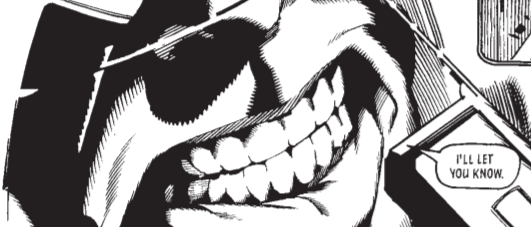
(1) DREDD

(2012…There’s an ellipsis because you know there should have been a sequel or TV series)


“I am the Law!”

You also knew this was coming.

My first and true love in comics is not one of the ruling duopoly of comics, DC and Marvel Comics, nor strictly speaking a superhero comic (although its main character is arguably as much of a ‘superhero’ as Batman), nor even an American comic (although it is set there, albeit drastically transformed in the twenty-second century).

It is Judge Dredd, the most iconic character from the British weekly SF anthology comic, 2000 AD, ongoing since it was launched in 1977. Unfortunately, American audiences remain somewhat unfamiliar with (or unresponsive to) Judge Dredd, despite his American setting (albeit futuristic) and despite that he is effectively a quintessential American hero in the same vein as Batman – relying on superior discipline, training, experience, equipment and resources, except as a governmental lawman rather than a vigilante billionaire. They even both effectively remain masked in their public identities, as Dredd never removes his helmet.

Even more unfortunately, the most substantial introduction of American audiences to Judge Dredd was the 1995 film, although fortunately that particular horror is fading with time. This Hollywood travesty was particularly inexcusable, because the essence of Judge Dredd is ultimately very simple – Judge Dredd is a futuristic Dirty Harry in a dystopian (and post-apocalyptic) SF satire. How hard is that, Hollywood?! On second thoughts, this simple formula was probably too much for Hollywood to handle – when they couldn’t even have Dredd keep his helmet on throughout the film.

The 2012 film was much more effective in capturing the elements of the original comic (not least in keeping Dredd’s helmet on throughout the film, with Karl Urban playing Dredd by his chin), but not as effective in capturing an audience – in my opinion and that of a few other people who’ve spoken about it, primarily because its own studio sabotaged it, in effect if not intent.

In its own way, this is as unfortunate as the first film, particularly at a time when comic book movies were in such vogue (and dystopian or post-apocalyptic movies have always been popular) – because if ever a comic deserved its own cinematic or screen adaptation, it’s Dredd, especially when you consider the dreck (or drokk – Judge Dredd slang in-joke alert) that does get adaptations. Perhaps a television adaptation would have been better, as it suits the more episodic nature as well as longer arcs of the storyline.

As for the 2012 film, the plot is pared right down – to the classic storyline of Dredd rooting out criminals or perps from a building, which was essentially the same plot as the introduction of the character in his very first episode of the comic, with the added element similar the film’s near contemporary of The Raid with Dredd being trapped within the building and having to fight his way out. However, the film does have a better antagonist than the comic’s first episode, drug queenpin Ma-Ma played by Lena Headey and written for the film rather than adapted from the comic – and a companion for Dredd with Psi-Judge Anderson, rewritten as Dredd’s rookie for the film.

The pared down plot is perhaps the primary reason why the 2012 film captured the essence of the comic much more effectively than the 1995 film with its convoluted storyline unsuccessfully trying to insert too many elements from the comic for its own good.


FANTASY OR SF


Dystopian and post-apocalyptic SF satire, much like the comic itself – but without the fantasy elements that would later pop up in the comic.


COMEDY


Perhaps the only arguable deficiency in the film is the lack of blackly comic satire that characterized the comic – and perhaps also the only arguable edge its predecessor had on it, although the “comic satire” as such of the 1995 film is highly arguable. However, I wouldn’t make that argument. Dredd as Dirty Harry in a dystopian SF satire is still in the film – and as I said the plot is essentially the same as that of the first episode of the comic, reflecting the original more subtle tone of satire rather than comedy in the comic.


RATING: 5 STARS*****

S-TIER (GOD TIER – OR IS THAT DREDD-TIER? JUDGE-TIER? GRUD-TIER?)

*

*

TOP 10 COMICS FILMS (TIER LIST)


S-TIER (GOD TIER)


(1) DREDD

My Old AND New Testament of comics films, because it’s Judge Dredd gruddamnit!


A-TIER (TOP TIER)


(2) AVENGERS – INFINITY WAR & ENDGAME

(3) SPIDERMAN: INTO THE SPIDERVERSE

I’m counting the sequel film as well and waiting for the third in the trilogy.

(4) GUARDIANS OF THE GALAXY

I’m counting the trilogy although the first film is the best

(5) THE SUICIDE SQUAD

The good one in 2021 with the definite article “the” – not the bad one in 2016


B-TIER (HIGH TIER)


(6) SCOTT PILGRIM VS THE WORLD

(7) KICKASS

(8) KINGSMAN

I count the 2017 sequel. I don’t count the 2021 prequel, let alone the 2024 spinoff Argyle. I do count the short animated crossover with Archer.

(9) LOGAN


X-TIER (WILD TIER) – BEST OF 2024


(10) DEADPOOL VS WOLVERINE


I’m counting the Deadpool trilogy.