
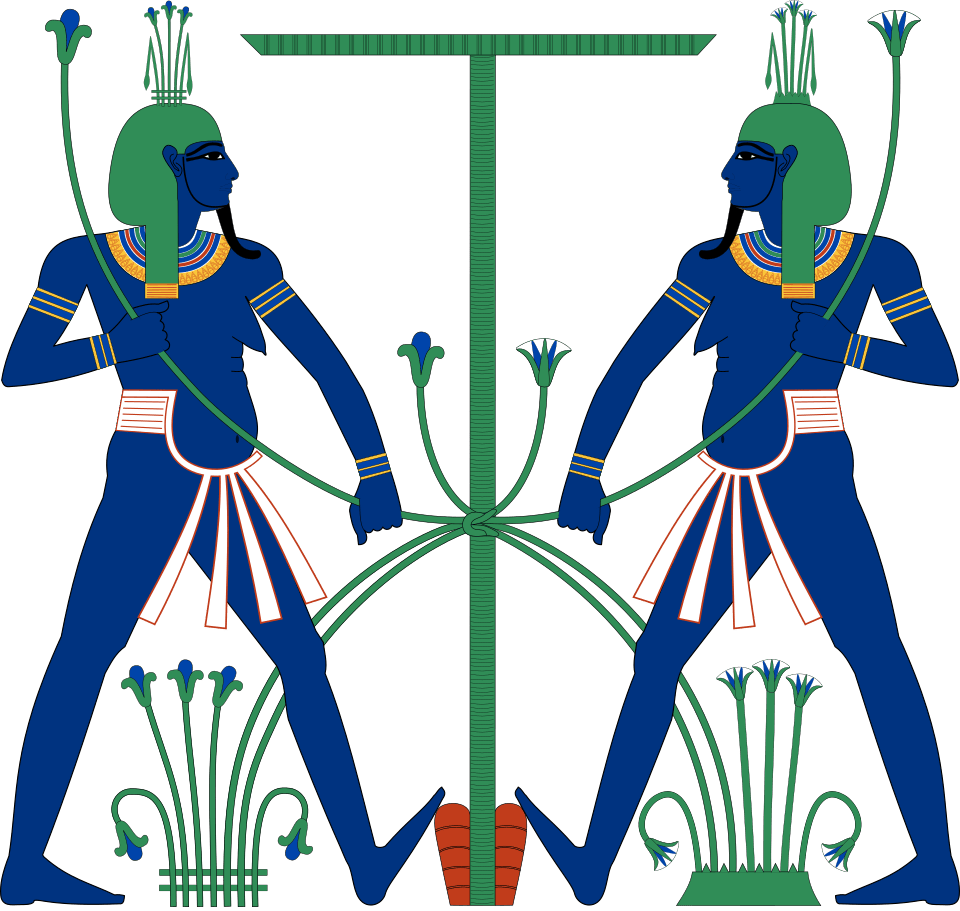
Hapi, god of the flooding of the Nile (public domain image)
(6) HYDRAULIC EMPIRE
The memorable phrase coined by German-American historian Karl Wittfogel to characterize “Oriental despotism” as essentially different from the polities of the Western world – although his hydraulic empires “were neither all located in the Orient nor characteristic of all Oriental societies”
Its fundamental feature is a social and governmental structure that maintains power and control through exclusive control over access to water – typically flood control and irrigation – and hence tending towards “despotism” in the form of highly centralized and hierarchal state power as well as specialized bureaucracy.
“According to Wittfogel, most of the first civilizations in history, such as Ancient Egypt, Mesopotamia, China, India, and Pre-Columbian Mexico and Peru, are believed to have been hydraulic empires. Most hydraulic empires existed in arid or desert regions, but imperial China also had some such characteristics, due to the exacting needs of rice cultivation. The Maurya Empire in India was classified by Wittfogel as a grandiose Hydraulic Economy”.
And so on. “The typical hydraulic empire government, in Wittfogel’s thesis, is extremely centralized, with no trace of an independent aristocracy – in contrast to the decentralized feudalism of medieval Europe”. Hence Oriental despotism – his most famous claim is “that climate in the Orient led to despotic rule”.
How well his thesis holds up is another matter. It has its critics, with a common criticism essentially posing the chicken or egg question, but with respect to which came first out of centralized state power or hydraulic control.
However, it is a phrase that sticks in one’s mind after reading it, prompting other thoughts and theories. Electric empire, anyone? I have a pet theory that plumbing is the basic indicia of civilization – at least up until electricity arguably replacing it as the indicia of modern civilization, or refrigeration and ice as the quixotic protagonist of The Mosquito Coast claimed.
Or I remember my father opining that the car economy – that cars and ancillary industries or services were the fundamental core of modern industrial economy – gave way to the computer economy, which is not too much different from the various phases proposed for the Industrial Revolution.
The Wikipedia article for hydraulic empire – admittedly my primary reference point which I’ve quoted here as I did not happen across the term directly from Wittfogel’s book – notes the parallel concept of river valley civilizations and the similarly parallel Marxist concept of Asian mode of production.
In his book Against the Grain (which I have read), James C Scott goes even further as he strikingly argues that despotism was ingrained in all states from their very foundations in grain agriculture as an instrument and means of state control, depending on various degrees of forced labor or extraction.