

Modern reconstruction of a Roman legion’s eagle or aquila standard, photographed by Matthias Kabel in Wikipedia “Aquila” under license https://creativecommons.org/licenses/by-sa/3.0/deed.en
TOP 10 TYPES OF EMPIRE
Given my interest in military history, it’s not surprising that I’ve also always found empires a fascinating subject of history, again from the fortunate perspective of being well removed from the sharp end of them. Empires are typically creatures of military conquest or power and rise and fall by war.
Hence, I’ve ranked my Top 10 Empires of history, but similarly to my Top 10 Wars, it doesn’t end there. No, indeed, just as I had my Top 10 Types of War, I also have my Top 10 Types of Empire, albeit the latter is not as distinctive or varied as the former in history. While empires do have broad types, or perhaps more precisely features, empires tend to be general practitioners rather than specialists and often are of overlapping types.
S-TIER (GOD-TIER)

Territorial empire rizz – the Qianlong Emperor in ceremonial armor on horseback, painted by Giuseppe Castiglione in 1739 (public domain image)
(1) TERRITORIAL EMPIRE
The most fundamental type of empire, as well as the primary one – both primary as in predominant in number but also as in first in time, with the very first imperial states in Mesopotamia being purely territorial empires.
Aren’t all empires territorial? That is, don’t all empires rule over territory or distinct land areas and populations outside its original border?
In short, yes. I’d say almost all empires have at least some territorial elements, with very few examples otherwise. However, some empires are more territorial than others, when territorial empires are defined as annexing or conquering contiguous or neighboring territory by land as opposed to by sea.
Of my top ten empires, one is distinctively territorial – the Maurya empire. Four more might be added as overwhelmingly or predominantly territorial empires, in which naval power played little part. Probably the next most obvious is the Mongol empire, excluding its unsuccessful attempts for maritime conquest of Japan and Java – which perhaps illustrates just how territorial it was. The same might be said for the Qing empire, apart from its marginal annexation of Taiwan. Yes, it had a navy, which even became the largest in east Asia, but it sucked. Then there’s the Macedonian empire, except for the maritime transport for Alexander’s army to cross the strait to Asia in the first place to start the conquests for which he is better known. If I’m counting the Macedonian empire as territorial, much the same goes for the Persian empire, although it relied much more on naval power in its imperial attempts at conquest of the Greeks.
Otherwise, the balance of my top ten empires is essentially more mixed in nature. Yes, even my top empire, the Roman Empire, as much as we usually visualize it as a territorial empire for its famed legions and roads or its contiguous appearance on a map. The Romans didn’t call the Mediterranean the Mare Nostrum for nothing, you…

Second taking of Chusan, China, 1 October 1841, during the First Opium War, painted by Edward H. Cree (public domain image)
(2) MARITIME EMPIRE
“A state with primarily maritime realms, an empire at sea or seaborne empire”, sometimes known by the fancy term of thalassocracy, with the European empires of modern history as maritime empires par excellence, the British Empire most of all.
Pro tip for European empires in modern history – you can have a maritime empire, or you can strive for continental domination, but you can’t do both. Just ask Spain, France and Germany.
The obvious counterpart of the territorial empire annexed or conquered on land contiguous with the imperial nation, the maritime empire conquers its subject territory or projects its imperial reach by naval power and transport, typically focused on trade routes and strategic ports.
Maritime empires are something of the exception to the rule – the rule that is, that most empires are territorial, sometimes known by the fancy term of tellurocracy. However, I’d say most empires have at least some maritime element, even those that are otherwise predominantly or mostly territorial – extending to some element of naval power and maritime trade or conquering some island territory along their coastlines. Even early Mesopotamian and Egyptian empires relied on river transport, although I’d say that’s pushing the definition of maritime empire too far.
Some empires are more maritime than others – with the empires in top rank of maritime empires as those in which their territory is entirely or almost entirely not contiguous with the imperial nation and typically at some oceanic distance. As I said, the modern European colonial empires are the archetypal examples of maritime empires, hence the British and Spanish empires are the archetypal maritime empires among my top ten empires.
Some empires are curious hybrids of territorial and maritime empires, such as my top empire, the Roman empire – despite our usual perceptions of it as the former with its famed legions and roads (as well as its contiguous appearance on a map), the Mediterranean was the lifeblood of its internal lines of communication. It almost literally had to slap its navy together in the First Punic War against the maritime empire of Carthage – and even then, designed it with the boarding ramp known as the corvus to transform sea battle into a form of land battle. However, that navy was instrumental in its conquest in the Mediterranean, even if it lacked the prestige of the legions or was deemed “un-Roman”. And of course, it relied on naval power and transport for its conquests and territory beyond continental Europe in Africa, Asia, and Britain.
You could argue that there’s an enduring opposition between maritime empires or sea power and territorial empires or land power in modern history, best symbolized by the opposition of the Anglophone naval powers to continental Eurasian powers.
I also have a pet theory that states whose primary military instrument is naval power, particularly those in islands or continents similarly protected by sea, lend themselves less to authoritarian despotism, particularly as they rely less on standing armies or mobilization on a large scale. Also, that their empires are more strategically selective or limited, at least initially, as they tend to be tied to coastal areas, ports, or naval bases – although sooner or later the temptation to conquer territory inland looms large.
The Greeks, particularly the Athenians, and the Phoenicians are the archetypal maritime empires of classical history, while the Italian city-states, notably the Genoese and Venetians, were the archetypal maritime empires of medieval and early modern history. For that matter, maritime empires are a recurring feature among city states, possibly because at sea they can punch above their weight on land.
And arguably the American empire is the archetypal maritime empire of contemporary history, despite its continental base. As its architect (and prophet) of sea power, Alfred Thayer Mahan, famed for his book The Influence of Sea Power Upon History, would have asserted, given his belief that national greatness was inextricably associated with the sea.
Then there are the more exotic maritime empires or thalassocracies beyond Europe – Srivijaya based in Sumatra and similar states in modern Indonesia, the Chola dynasty in southern India, Brunei, and so on.

Buckle with a scene of boar hunting – horserider of probable Xiongnu origin 2nd–1st century BC, National Museum of Antiquities of Tajikistan (public domain image)
(3) NOMADIC EMPIRES
“History is mostly a matter of hoping those psychos on horseback don’t attack this summer, steal the grain and take the slaves” – Pax Romana Youtube channel
And occasionally they would stay and make empires.
As I noted in my entry in my Top 10 Empires for the Mongol Empire – the nomadic empire par excellence – the horse blitzkrieg was a recurring feature mounted (heh) by nomadic herding tribes, particularly by those from the steppes of central Asia, to such devastating effect against more sedentary or settled agricultural states throughout history.
“Nomadic empires, sometimes also called steppe empires, Central or Inner Asian empires, were the empires erected by the bow-wielding, horse-riding, nomadic people in the Eurasian Steppe, from classical antiquity (Scythia) to the early modern era (Dzungars). They are the most prominent example of non-sedentary polities”.
The nomadic empires exemplify what James C. Scott, in his Against the Grain, dubbed the Golden Age of the Barbarians – or what Walter Scheidel, in his Escape from Rome, dubbed the steppe effect. Or the vivid image by John Keegan in his A History of Warfare that nomadic herding tribes gained their tactical and strategic edge by essentially applying the same maneuvers in warfare as they did herding their animals. Essentially, Eurasian steppe horse nomads will always feature significantly in any general military or world history, punching above their weight (in population).
Although as Genghis Khan, the greatest nomadic emperor of them all, is reputed to have observed – it is one thing to conquer the world on horseback, it is another to dismount and rule it.
“Some nomadic empires consolidated by establishing a capital city inside a conquered sedentary state and then exploiting the existing bureaucrats and commercial resources of that non-nomadic society. In such a scenario, the originally nomadic dynasty may become culturally assimilated to the culture of the occupied nation before it is ultimately overthrown”.
One could compile a top ten nomadic empires, khanates or khaganates, and hordes – although let’s face it, the Mongols and Huns would be the big names at the top. But there’s also Cimmerians (no – not Conan), Scythians, Sarmatians, Kushans, Bulgars, Uyghurs and more.

What else to illustrate this than Desolation, the fifth and final of the series of paintings The Course of Empire by Thomas Cole from 1833 to 1836 (public domain image)?
(4) VESTIGIAL EMPIRE
“I will show you fear in a handful of dust”
For me, vestigial empires inhabit that poetic realm somewhere between that handful of dust in T.S. Eliot’s The Wasteland and the desolate statue of Ozymandias in Shelley’s poem – with Matthew Arnold’s Dover Beach thrown in for good measure, that “melancholy, long, withdrawing roar, retreating to the breath of the night-wind, down the vast edges drear and naked shingles of the world”.
As I stated in the introduction to my Top 10 Empires, my particular interest in empires is not so much in their robust rise, but in their decline and fall. However, not all empires are equal in their decline and fall. Some empires seem to collapse almost overnight, but others hold the line over incredible areas or incredible periods of time (or both), even rebounding or bouncing back as a resurgent empire.
It’s those empires that are tenacious in their decline and fall that give rise to those weakened or weakening versions of empire dubbed as vestigial empires – empires that still cling on or remain, but as patchwork pieces or shadows of their former selves, their influence declining and territory shrinking, occasionally down to just the imperial capital itself or close enough to it.
Indeed, an empire may be so vestigial in its decline and fall that it is difficult to identify its final fall.
They tend to leave behind monumental architecture or statuary as their most definitive feature but also a common tongue or lingua franca as well as still-working infrastructure or even institutions, the latter often mired with a decadent or residual elite.
There are many examples in history, but perhaps the archetypal one remains the Roman Empire, including its vestigial eastern half, known to history as the Byzantine Empire, which became a vestigial empire in its own right – one of those examples that essentially declined down to the imperial capital itself.
The vestiges of empire often outlast the empire itself – as with the Roman Catholic Church inheriting the capitol and pontifex as well as many of the trappings and much of the mystique of the western Roman Empire.

World map by the Equal Earth projection, which preserves relative size everywhere with a low level of shape distortion except for very near to the poles (public domain image)
(5) WORLD EMPIRE
An empire that shaped the world by how large, populous, rich, powerful, or influential it was.
A world empire is not necessarily a global empire – that is, an empire that is global by geographic extent. Few empires are truly global. Of my top ten empires, only two were global – the Spanish Empire, and even more so, the British Empire. For both, it was famously said that the sun never set on them, reflecting their geographic extent – albeit the British Empire borrowed the same phrase from the Spanish Empire, which in turn adapted similar phrases in usage from the Persian and Roman Empires.
You really only have global empires from the European maritime empires and those argued to be their successors – and not even all of them. Yes, I’d rank the French colonial empire as a global empire, but not the Belgian, Italian or German empires – although I’d give a pass (barely) to the Dutch empire as global due to the extent of its maritime trade, if not its actual colonial possessions.
Yes, I’d argue that a world empire has to be large, if not necessarily global in extent. By that criteria alone, three of my top ten empires rank among the ten largest empires in history and hence might be ranked as world empires – the Mongol Empire, the Chinese Qing Empire, and the Arab caliphates, with the Mongol Empire and Arab caliphates also having an impressive geographic range coming reasonably close to global extent.
But yes, I’d argue that the other criteria might count for as much or more.
Indeed, a competing measure of the largest empires by history is not by their area but by estimated percentage of contemporary world population. By that criteria, the Qing Empire ranks as the largest empire in history with 37% of the world population in 1800 AD, the Mongol Empire as fourth largest with 31% in 1290 AD, and the Roman Empire as the fifth largest with 30% in 150 AD. Outside the top ten largest empires by proportion of world population, which are mostly Chinese ones, other empires rank impressively – the British Empire with 23% in 1938 AD, the Maurya Empire with 19% in 250 BC, the Macedonian Empire with 15% in 323 BC, the Umayyad Caliphate with 13% in 750 AD, and the Persian Achaemenid Empire with 12% in 450 BC.
One might expect similar percentages of the contemporary world economy, particularly as the size of pre-industrial economies was largely a function of population.
So yes, I’d argue that all my top ten empires were world empires by one measure or another – by size or geographic extent, by population or by economy, and by power or influence,
And yes, that’s including the Macedonian and Maurya empires. Setting aside their proportions of global population or economy which would alone arguably qualify them as world empires, there’s also their enduring influence of Hellenic culture and Buddhism respectively.
A-TIER (TOP TIER)
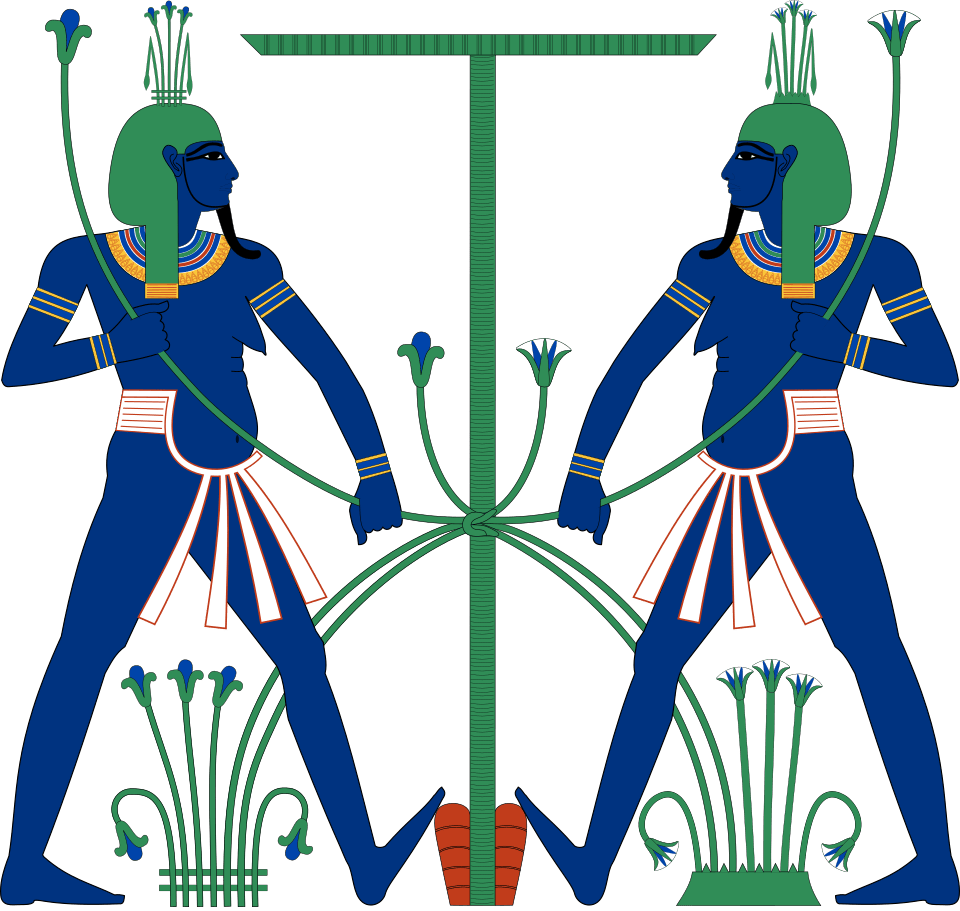
Hapi, god of the flooding of the Nile (public domain image)
(6) HYDRAULIC EMPIRE
The memorable phrase coined by German-American historian Karl Wittfogel to characterize “Oriental despotism” as essentially different from the polities of the Western world – although his hydraulic empires “were neither all located in the Orient nor characteristic of all Oriental societies”
Its fundamental feature is a social and governmental structure that maintains power and control through exclusive control over access to water – typically flood control and irrigation – and hence tending towards “despotism” in the form of highly centralized and hierarchal state power as well as specialized bureaucracy.
“According to Wittfogel, most of the first civilizations in history, such as Ancient Egypt, Mesopotamia, China, India, and Pre-Columbian Mexico and Peru, are believed to have been hydraulic empires. Most hydraulic empires existed in arid or desert regions, but imperial China also had some such characteristics, due to the exacting needs of rice cultivation. The Maurya Empire in India was classified by Wittfogel as a grandiose Hydraulic Economy”.
And so on. “The typical hydraulic empire government, in Wittfogel’s thesis, is extremely centralized, with no trace of an independent aristocracy – in contrast to the decentralized feudalism of medieval Europe”. Hence Oriental despotism – his most famous claim is “that climate in the Orient led to despotic rule”.
How well his thesis holds up is another matter. It has its critics, with a common criticism essentially posing the chicken or egg question, but with respect to which came first out of centralized state power or hydraulic control.
However, it is a phrase that sticks in one’s mind after reading it, prompting other thoughts and theories. Electric empire, anyone? I have a pet theory that plumbing is the basic indicia of civilization – at least up until electricity arguably replacing it as the indicia of modern civilization, or refrigeration and ice as the quixotic protagonist of The Mosquito Coast claimed.
Or I remember my father opining that the car economy – that cars and ancillary industries or services were the fundamental core of modern industrial economy – gave way to the computer economy, which is not too much different from the various phases proposed for the Industrial Revolution.
The Wikipedia article for hydraulic empire – admittedly my primary reference point which I’ve quoted here as I did not happen across the term directly from Wittfogel’s book – notes the parallel concept of river valley civilizations and the similarly parallel Marxist concept of Asian mode of production.
In his book Against the Grain (which I have read), James C Scott goes even further as he strikingly argues that despotism was ingrained in all states from their very foundations in grain agriculture as an instrument and means of state control, depending on various degrees of forced labor or extraction.

A mufti sprinkling a cannon with rosewater – engraving by Hieronymus Löschenkohl, 1788 (public domain image)
(7) GUNPOWDER EMPIRE
A term that isn’t as broad as you might think – not any empire with firearms, but instead a term used for three specific empires by two specific historians, notably William McNeill in his 1993 book The Age of Gunpowder Empires.
“Gunpowder empires, or Islamic gunpowder empires, is a term coined by the American historians Marshall G.S Hodgson and William H. McNeill to describe three early modern Muslim empires: the Ottoman Empire, the Safavid Empire, and the Mughal Empire, which flourished between the mid-16th and early 18th centuries.”
As I said, you’d think it might be a term to connote any empire with firearms, of which the most famous are the European colonial empires from the early modern period. Indeed, the European colonial empires might well be called machine gun empires, at least from the nineteenth century onwards.
That is the point John Ellis makes in his book A Social History of the Machine Gun – caustically observing that while European states were reluctant to deploy machine guns against each other as predictably causing mass mechanized slaughter until the First World War, they were far less reluctant to deploy them in their colonial wars.
As Hillaire Belloc observed in a satirical verse:
“Whatever happens, we have got
The Maxim gun, and they have not”
In McNeill’s usage, “the gunpowder empires conquered vast amounts of territory with the use and deployment of newly invented firearms, especially cannon and small arms; together they stretched from Southeast Europe and North Africa in the west to Bengal and Arakan in the east”.
The contrast between his gunpowder empires and European use of gunpowder is that no single European state was able to centralize or dominate power through gunpowder – “As a result, the three empires were among the most stable of the early modern period, leading to commercial expansion, cultural patronage, and the consolidation of political and legal institutions.”.
However, “more recently, the Hodgson–McNeill gunpowder empire hypothesis has been called into disfavour as a neither adequate [n]or accurate explanation, although the term remains in use”,
One of my favorite uses of the term was by Harry Turtledove for the title of his book Gunpowder Empire, an alternative history if the Roman Empire had survived to the use of gunpowder. The classical Roman Empire, that is, as the Roman Empire did actually survive to the use of gunpowder as the Eastern Roman Empire – albeit as a very vestigial empire essentially reduced to its imperial capital Constantinople, which famously fell to one of the gunpowder empires, the Ottoman Empire, using cannons to break the city walls. Ironically, the designer of the largest cannon – and one of the largest cannons ever built – was a Hungarian who originally offered his services to the Romans. So the title of Turtledove’s book seems something of a misnomer.

Landing of Columbus, painting of John Vanderlyn 1847 (public domain image)
(8) COLONIAL EMPIRE
You know what? I’m classing colonial empire with hydraulic empire and gunpowder empire (hence its placement with them in my top ten) – as offering some surface explanatory features but ultimately “neither adequate nor accurate explanation”.
Um, aren’t all empires colonial empires? Isn’t colonialism essentially synonymous with imperialism?
Well yes, hence my classification.
That is not to say that there aren’t some distinctive features that might be identified for colonial empires or colonialism.
Perhaps the most distinctive is that typically identified as “settler colonialism” – the large-scale immigration by settlers to colonies, as reflecting the origin of the term from Roman colonia – settlements or cities by Roman citizens, which in turn followed the ancient history of such settlements, notably by Greeks and Phoenicians.
The other potentially distinctive feature is that colonial empires operate on a model of an ongoing demarcation between the imperial nation and its subjects, such that the latter are not assimilated into the imperial nation or as citizens – “Rather than annexation, this typically culminates in organizing the colonized into colonies separate to the colonizers’ metropole”.
However, these distinctions can be fluid or questions of degree even when present, and definitions of colonialism are often so elastic as to be effectively meaningless other than as synonymous for imperialism – or particularly for contemporary definitions of colonialism, as synonymous for the imperialism you want to condemn as opposed to what you don’t.
Typically, colonial empires or colonialism invokes the modern European maritime empires, indeed usually called European colonial empires – often to the exclusion of anything else, except perhaps suitably Western “predecessors” such as the Romans or the Crusades, contemporaries such as Tsarist Russia or Japan, or “successors” such as the United States.
And as such, typically colonial empires or colonialism is used to invoke a particularly virulent form of exploitative or extractive imperialism. You know, the evil empires – as opposed to other states or polities that may well be imperialistic but are proposed to be more benevolent or benign in nature.
Like memes I’ve seen in response to people arguing that Arab or Ottoman imperialism wasn’t imperialism or at least a benign sort of imperialism – colonialism is when it is by boat.
But really, all empires are to some extent evil empires – and at least have some exploitative or extractive elements with respect to their subjects. No empire rises to or maintains its power by being nice, but by defeating or conquering its opponents and imposing control of its subjects – including that the latter are not free to leave or opt out of the empire, otherwise it’s not really or no longer an empire.
As such, apart from settler colonialism or fixed distinctions between the imperial nation and its colonies, colonialism and colonial empires ultimately seem more questions of degree within imperialism in general.

“Coca-Cola – symbol of free West! Also…Coca-Colonization!
(9) HEGEMONIC EMPIRE
An empire that rules more through “soft” power or influence than “hard” power or force – more velvet glove than iron fist.
Although typically a hegemonic empire is capable of both, when the chips are down, even if the essence of a hegemonic empire is to see that the chips stay up – “A hegemonic empire maintains control by making other people want to be part of it”.
But really, it’s another concept that seems as nebulous as colonial empire – in that all empires, or at least all that rule by the most blunt or brute force, have some element of hegemony or hegemonic empire. Certainly, the most successful or enduring empires do, since it is usually the key element in their success or endurance.
As I said in my introduction to my Top 10 Empires (when qualifying my evil empire rankings), almost every empire proclaims itself to be spreading civilisation or bringing some benefit to its subjects- and all but the most destructive have at least some merit in that claim. They were often the only means for any political unity above the tribal level, or indeed peace from inter-tribal warfare, although of course both were typically achieved by an imperial “tribe” or nation subjugating others, usually with great death or destruction, even if it subsequently absorbed or adopted the latter as citizens or soldiers of empire.
All those things can contribute to hegemonic empire or hegemony. Just looking at my top three empires, all of them can be as readily ranked as hegemonic empires as they can be as “evil empires”.
The Roman Empire could be absolutely brutal to those who got on the wrong side of it – and even occasionally those who got on the right side of it – but also had a mastery of hegemonic empire. It’s not for nothing that Pax Romana has echoed down the ages as a positive symbol of imperial “peace”, despite the violence that underlay it. There was also the concept of Romanitas underlying the empire – and the extent to which the empire ‘romanized’ its subjects and client states or vassals.
The Mongol Empire is famed for the death or destruction it wrought – but even it had its Pax Mongolica and hegemonic empire, with positive or even progressive aspects.
There’s a whole publishing industry, both traditional and online, devoted to the British Empire as evil empire, but it exceeds the Roman or Mongol Empires in claims to hegemonic empire. Indeed, we are still living in its hegemony, not least because it was reinforced by being succeeded by a similar Anglophonic world power – that hegemonic empire par excellence to the extent that it is debated as an empire at all, the United States.
However, it is perhaps not surprising that empires have leant more into hegemonic empire in modern history from the European maritime empires onwards. Empires have become more difficult to sustain through military force or hard power in the face of resistance, while the means of hegemonic empire have become more pervasive in scale, scope and transformative force – through modern technology, communications, economics and transportation.
X-TIER (WILD TIER)

(10) IDEOLOGICAL EMPIRE
A term I’ve coined for a particular type of hegemonic empire where the hegemony – or driving force of its expansion – is ideology, religious or political.
Ideological empires are surprisingly prevalent, particularly if you include religion as ideology. Of course, it has to be a particular type of religion – essentially proselytizing or “missionary” religion, prompting my quip that the four great missionary religions are Buddhism, Christianity, Islam, and Marxist-Leninism.
Of my top ten empires, no less than four were ideological empires by way of missionary religion – the Maurya Empire by Buddhism, the Arab Caliphates and Ottoman Empire by Islam, and the Spanish Empire by Catholicism.
As for ideological empires by way of political ideology, they essentially arise from one of three modern political ideologies. Fascism is the most straightforward but also short-lived as it does not offer its imperial subjects much by the way of hegemony, but the other two are more paradoxical as they are nominally anti-imperialist – communism (hence my Marxist-Leninism quip as missionary religion quip) and liberalism. The latter is particularly striking in the modern European empires, which often juxtaposed domestic liberal democracies with their empires elsewhere, although ultimately the paradox became too much for those empires to bear – as it did for Soviet communism.