Theatrical release poster for the 1982 Conan the Barbarian film – still arguably the defining image of fantasy in popular culture, so much so that it is often dubbed the Conan pose (as originating in pulp fiction covers, particularly when combined with the leg cling trope not in this poster)
“Fantasy isn’t just a jolly escape: It’s an escape, but into something far more extreme than reality, or normality. It’s where things are more beautiful and more wondrous and more terrifying.” – Terry Gilliam
Exactly what it says on the tin – counting down my Top 10 Fantasy Books.
In effect, it runs parallel to my Top 10 Literature list, albeit there is quite the fantasy overlap in that list, in that this is my top ten list of fantasy literature. Comics tend to be fantasy or SF – at least the ones I like – but I have a separate Top 10 Comics list. Similarly, I like many fantasy or SF films or TV series, but they have their own top ten lists.
But what is fantasy?
Magic is often seen as or argued to be the defining feature of fantasy, not least by me.
Which prompts to mind this quotation from TV Tropes – “Fantasy: it’s stuff with magic in it, not counting psychic powers, or magic from technology, or anything meant to frighten, or anything strongly religious, or the technology behind the magic that is magitek, or — where did that clean-cut definition go?”
Fictional genres can be notoriously difficult to define or difficult to distinguish from other fictional genres, with the two looming largest – and closest – to fantasy being science fiction and horror, with all three often being classed within the category of speculative fiction.
Again as per TV Tropes – “While the core of the fantasy genre is clear enough, there is no succinct definition that encompasses it all. The boundary with science fiction is notoriously ambiguous and the boundary with horror is often no less fuzzy.”
Indeed, I will note where science fiction or horror loom large or close to the fantasy for my entries.
That core of the fantasy genre is often defined as high fantasy – fantasy set in a so-called secondary world or world other than our own, even if linked to or evolving into our own in some way. Hence the counterpart of fantasy set in our own world is often defined as low fantasy. These distinctions within the genre of fantasy, usually classed as sub-genres of fantasy, intrigue me even more than the distinctions between fantasy and other genres – and fantasy sub-genres are worthy of their own top ten.
Whether in its core of hard fantasy or in other sub-genres, fantasy tends to be defined as such by common features or themes. And yes – magic or supernatural elements is the primary feature or theme, but not always. There are fantasy works with low or no magic.
Secondary worlds are another common feature or theme, as are imaginary beings or creatures – here be dragons! – and what TV Tropes calls the appeal to a pastoral ideal.
Anyway, here are my Top 10 Fantasy Books – or my Top 10 Fantasy Literature.

Paperback cover of the first book, The Will of the Many, published by Saga Press in 2023 – the edition I own
(10) JAMES ISLINGTON –
HIERARCHY (2023-2025)
My usual rule is to reserve my wildcard tenth place for the best entry from the present or previous year, although in this case I have bent the rule slightly as it was the second book of the series that was published in 2025 with the first book published in 2023. I’m still counting it within my usual rule – I make my own rules and break them anyway!
Australian fantasy writer? Epic fantasy modelled on the Roman Republic, except where the metaphorical become literal and citizens of lower classes have to cede half of their Will – their life force or physical and mental energy – to the citizens of classes above them? Protagonist rebelling against the imperial Republic literally draining the Will of its subjects? What’s not to love?
The Catenan Republic of the Hierarchy is a little like a pyramid scheme, except that only the chumps in the lowest class are left with half their Will. Each tier cedes Will to the tier above them, except all but the lowest tier is ceding half the Will they have received from the tier below them. Of course, the people at the top of each pyramid are powerful indeed, empowered by the strength of those below them without having to cede anything.
Will is also used to power magical technology – both that technology and the means to extract Will originate from their predecessors prior to the Cataclysm three centuries previously, the apocalypse that more than decimated the world – leaving only one in twenty alive. So, in effect combining a fantasy Rome with a fantasy Atlantis, not unlike my top entry…
RATING:
X-TIER (WILD TIER) – BEST OF 2025

(9) WILLIAM BROWNING SPENCER –
RESUME WITH MONSTERS (1995)
Great Cthulhu in a cubicle!
Yes – we’re talking a light fantasy evocation of Lovecraft’s Cthulhu Mythos.
Spencer delightfully combines a playful comedic style and observational humor to fantasy themes, as in Resume with Monsters, which combines the Cthulhu Mythos with satire of the corporate cubicle drone workplace.
Philip Kenan may not be the most reliable narrator of his experience as a worker in dead-end office cubicle drone jobs – between bouts of therapy and his unrequited quest to win back his ex-girlfriend Amelia, although he saved her (and quite possibly the world) from some…thing at their mutual previous employment (“the Doom That Came to MicroMeg”). Now he is routinely alert to signs of otherworldly incursions at his workplace.
Or perhaps he is simply lapsing into mental breakdown or outright insanity, symptoms of his obsession with H.P. Lovecraft’s “monsters” (his therapist noting that Lovecraft “was not in the pink of mental health”). An obsession born of his father’s own obsessive narration to him of the stories of Lovecraft, identifying it with the ‘System’ – “don’t let the System eat your soul”. An obsession that Philip Kenan tries to keep at bay by the equally obsessive emotional talisman of his own Lovecraftian novel, “The Despicable Quest”, which he has been constantly rewriting over twenty years until it has swollen to two thousand pages. Or perhaps all of the above.
It has a special resonance for those, like myself, who have always suspected a connection – nay unholy collusion! – between the soul-destroying corporate workplace and the soul-destroying dark entities of the Cthulhu Mythos. In my own experience as corporate cubicle drone, I suspected that the mind-numbingly boring files simply could not exist for their own purpose but had to have a more substantial and sinister purpose in inducing a receptive state or lack of resistance to otherworldly invasion. Of course, I was too smart for them, as I simply didn’t do my files…
SF & HORROR
It’s the Cthulhu Mythos – of course there’s an overlap with SF and (cosmic) horror!
RATING:
A-TIER (TOP TIER)
*

(8) JAMES MORROW –
GODHEAD TRILOGY (1994-1999)
Religious and philosophical satire clothed in absurdist Vonnegutian fantasy – Morrow takes the Nietzschean theme that God is dead and makes it flesh, literally in the form of a two mile long corpse – or Corpus Dei – in the Atlantic Ocean.
This is the premise of the trilogy as a whole – particularly the opening of the first novel, Towing Jehovah. God is dead and the Vatican charges Captain Anthony Van Horne to tow the Corpus Dei with a supertanker to the Arctic Circle, to preserve it from decomposition, for possible resuscitation or at least for time to ponder the theological questions of the Deity’s death.
My favorite is the second of the trilogy, Blameless in Abaddon, where theodicy is made flesh – theodicy being the theological study of the problem of evil or suffering in the manner of the biblical Book of Job. It turns out that there’s life in the old God yet – and He’s about to be prosecuted in the World Court for the suffering of His Creation.
In the third book, The Eternal Footman, the last remnant of the Corpus Dei, God’s grinning skull or Cranium Dei, is in geosynchronous orbit over Times Square and Western civilization is collapsing as a people become ‘Nietzsche positive’ with their awareness of impending death (literally embodied in their own double or ‘fetch’).
SF & HORROR
Not really – it’s pretty much pure absurdist fantasy, although that’s not uncommon in works that are nominally SF.
RATING:
A-TIER (TOP TIER)

2004 edition published by William Morrow & Company
(7) CHRISTOPHER MOORE –
PRACTICAL DEMONKEEPING (1992)
Christopher Moore is a writer of comic contemporary fantasy, who has combined the narrative voice (and Californian geography) of John Steinbeck and the comic absurdist fantasy of Kurt Vonnegut.
Like other writers, Moore has constructed his own storyverse, with its focus in California (Moore himself lives in San Francisco) and particularly the sleepy town of Pine Cove. Sleepy that is, until invaded by supernatural or othe forces such as Godzilla (the fantastically named Lust Lizard of Melancholy Cove) or near-miss zombie apocalypses (The Stupidest Angel).
As for which Moore novel is my personal favorite, there’s some tight competition – such as the Bloodsucking Fiends vampire love trilogy set in San Francisco, A Dirty Job psychopompic thriller also set in San Francisco (which crosses over with Bloodsucking Fiends) or anothe fantastically named novel, The Island of the Sequined Love Nun (stepping outside the main Californian venue of his storyverse to the Micronesian Island of the Shark People).
However, I’ll go with his debut novel, Practical Demonkeeping, in which Pine Cove is invaded by a demon and its weary summoner:
“The good-looking one is one-hundred-year-old ex-seminarian and “roads” scholar Travis O’Hearn. The green one is Catch, a demon with a nasty habit of eating most of the people he meets. Behind the fake Tudor facade of Pine Cove, California, Catch sees a four-star buffet. Travis, on the other hand, thinks he sees a way of ridding himself of his toothy traveling companion. The winos, neo-pagans, and deadbeat Lotharios of Pine Cove, meanwhile, have other ideas. And none of them is quite prepared when all hell breaks loose.”
SF & HORROR
Not so much in this book and Moore predominantly keeps to fantasy but he occasionally dips a toe into SF in his books, as with the Lust Lizard of Melancholy Cove.
He dips more than a toe into horror or dark fantasy, as with this book and his vampire books.
RATING:
A-TIER (TOP TIER)
*

Cover of the complete Drive-In Trilogy, paperback edition published 2020 by BookVoice Publishing
(6) JOE LANSDALE – THE DRIVE-IN TRILOGY (1988-2005)
*
Joe Landsale is a genre-hopping self-branded mojo storyteller so Texan his books positively drawl. His fantasy is never purely fantasy, as he writes books and stories (and comics!) in a number of genres, often at the same time. Westerns, of course – although he is from east Texas – but often of the Weird West, horror or so-called splatterpunk, mystery, suspense and thrillers.
A good introduction to Lonsdale is his short stories, which are particularly difficult to pin down in genre. I mean, how do you classify “Bubba Ho-Tep” (subsequently adapted into film starring none other than the Chin himself, Bruce Campbell) – in which an aged Elvis Presley and a black JFK battle a soul-sucking mummy in a nursing home? (No, seriously – Elvis Presley, having swapped with a double to opt out of fame. Not sure about JFK though – he claims the Conspiracy swapped his mind into his present body. Even Elvis is skeptical). Or his post-zombie apocalyptic “On the Far Side of the Cadillac Desert with Dead Folks”? “Frequent features of Lansdale’s writing are usually deeply ironic, strange or absurd situations or characters”. Indeed.
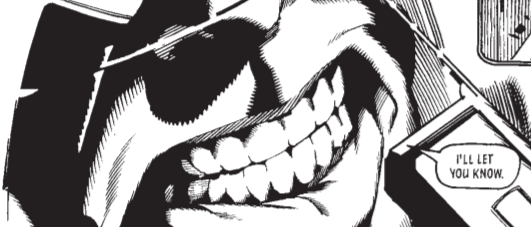
And perhaps none more bizarre than my introduction to Lansdale and still my favorite, although it is a little intense (if by intense you mean insane) – his 1988 book The Drive-In, or for its full title, The Drive-In: A ‘B’ Movie with Blood and Popcorn, Made in Texas. It starts as a normal summer Friday night horror movie marathon at the Orbit Drive-In in Texas. And then it becomes the horror-movie marathon, as they are trapped by a demonic grinning comet in the drive-in, beyond time in an eternal night – seemingly at the whim of the dark gods of B-grade movie horror, who lend a hand to all the base humanity on show with a little (or a lot) of some monstrosity of their own, with the Popcorn King.
Don’t eat the popcorn. It’s watching you.
A sequel – The Drive-In 2: Not Just One of Them Sequels – followed shortly after in 1989, with a third book (Drive in 3: The Bus Tour) in 2005 rounding out the Drive-In Trilogy.
SF & HORROR
As I said, genre-hopping – so this trilogy and Lansdale in general straddle the lines between fantasy, SF and horror. This trilogy leans heavily into horror – or splatterpunk.
*
RATING:
A-TIER (TOP TIER)

(5) ADRIAN TCHAIKOVSKY –
SHADOWS OF THE APT / TALES OF THE APT (2008 – 2018)
Like my previous entry, this entry particularly resonated with me as reflecting my own unwritten story idea involving the same premise – but then Adrian Tchaikovsky went ahead and wrote it. And it’s awesome.
I have always been fascinated by insects, so one of my unwritten story ideas involved high fantasy with insect-people. They were essentially human, but with the skin or hair coloring of their insect species, as well as other physical attributes that did not radically alter their otherwise human appearance – wings for example (in the style of the butterfly or other insect wings occasionally depicted on fairies), perhaps antennae and so on.
I imagined the insect-people as essentially divided up into realms according to the three great species of social insects – bees, ants and wasps, although there would be different realms of each (corresponding to different sub-species or types). Each of these realms would also include other thematically similar insect-peoples – for example, bee-kingdoms (or more precisely, bee-queendoms) would include other pollinating insects, such as butterflies.
As for antagonists, one was spoilt for choice – flies or locusts as marauding hordes (the Locust Horde!), various parasitic insects (fleas, mosquitoes and so on) as blood-sucking bandits or brigands, arachnids such as spiders or scorpions as monstrous figures. However, I imagined the most dangerous and recurring antagonists as the fourth great species of social insects – termites. In fairness, I didn’t get much beyond imagining the various insect-people societies, although I did imagine my main protagonist as a mantis warrior.
And then I found Adrian Tchaikovsky’s Shadows of the Apt series, which effectively does just that – a high fantasy set in a world of insect-‘kinden’, humans who have adopted some of the characteristics of their insect-types (or arachnid-types) through their magical Art from the dangerous and giant fantasy insects (or arachnids) of this world. Ant and beetle kinden dominate the so-called Lowlands (not surprisingly, given the sheer prevalence of those insect species in our world).
Even more intriguingly, it is a world in which magic is being replaced by science – an industrial revolution by the technologically Apt peoples of the title, matched by a political revolution, in which the more mundane but Apt ants and beetles have ousted the more magically-minded moths and mantises (although mantis warriors are still legendary). However, the antagonists are not termites, but the growing and ruthless Wasp Empire.
Of course, Tchaikovsky is a little too fond of spiders for my arachnopobia (even if spider girls are notoriously hot) – a fondness that extends across his fantasy or SF works, not just the spider-kinden in this series. Perhaps because Tchaikovksy is secretly a spider himself, or maybe a man-shaped swarm of spiders, without a shred of normal human arachnophobia to show for it.
So – damn you, Adrian Tchaikovsky, for conceiving and executing your insect fantasy first, in such an epic series! And I love it!
SF & HORROR
Tchaikovksy straddles both fantasy and SF genres – his Hugo Award-winning Children of Time series is an example of the latter but of course also features his beloved spiders.
For that matter, Shadows of the Apt has more than a touch of SF to it – and on occasions I almost thought it had a similar premise as the Children Time series with human (and arthropod) space colonists. Setting aside those thoughts, it was interesting to have a fantasy world increasingly eschewing magic for industrialization and technology.
And it wouldn’t take too much tweaking to adapt his premises to horror. Because, you know, spiders – perhaps not to Tchaikovsky who loves them, but to an arachnophobe like myself.
RATING: 4 STARS****
A-TIER (TOP TIER)
*

(4) GARTH NIX –
THE KEYS TO THE KINGDOM (2003 – 2010)
Cosmic fantasy by an Australian writer.
Creation is coming undone – not just the universe, but the entire multiverse, is slowly falling apart into Nothing in the absence of its Creator, the Architect. And at the center of it all, the cosmic structure called The House, divided up into seven domains or worlds by its seven most powerful denizens, the Morrow Days.
But the Architect left his Will (in more than one sense of the word) and where there’s a will, there’s a way – for mortal Rightful Heir to the Keys to the Kingdom, the aptly named Arthur Penhaglion, who has to ascend all seven domains of The House to reclaim the Will and the Keys to the Kingdom from each Morrow Day – Mister Monday, Grim Tuesday, Drowned Wednesday, Sir Thursday, Lady Friday, Superior Saturday and Lord Sunday.
Also somewhat reminiscent of the cosmic fantasy of one of my favorite webcomics – Kill Six Billion Demons
SF & HORROR
Definitely overlaps with multiverse SF – not so much horror, except perhaps for occasional elements.
RATING:
A-TIER (TOP TIER)

(3) JOSEPH FINK & JEFFREY CRANOR –
WELCOME TO NIGHT VALE (2012 – PRESENT)
“A friendly desert community, where the Sun is hot, the Moon is beautiful, and mysterious lights pass overhead while we all pretend to sleep. Welcome to Night Vale.”
Surreal horror and humor podcast styled as a community radio broadcaster in an American desert town – although my familiarity with it is more from the novels, which served as my introduction to the Night Vale setting, a desert town where all conspiracy theories are real as well as other urban myths and other surreal fantasies.
In other words, a fantasy and conspiracy kitchen sink setting, where the laws of time and space and nature in general don’t apply, or at apply only spasmodically. The citizens of Night Value simply roll with it, accepting surreal fantasy side by side with mundane reality.
“The news from Lake Wobegon as seen through the eyes of Stephen King”. Alternatively the Illuminatus Trilogy filtered through H.P. Lovecraft and crammed into one desert town. Or the surreal dream logic of David Lynch on crack or acid flashback (or both).
The Sheriff’s Secret Police along with all the other government surveillance agencies and spy satellites, Old Woman Josie surrounded by angelic beings all named Erika, the Glow Cloud (all hail the Glow Cloud!) and plastic pink flamingos that warp time and space.
And then you have the really dangerous entities and eldritch abominations – the car salesman loping like wolves through their yards, the mysterious hooded figures in the town’s forbidden dog park, the City Council (in the council building draped nightly in black velvet) and worst of all, the Library and its most dangerous part, the fiction section filled with lies…
SF & HORROR
As usual for fantasy kitchen sink settings, anything goes – even SF and horror.
RATING: 5 STARS*****
S-TIER (GOD TIER)

Prince Caspian movie poster art
(2) C.S. LEWIS –
NARNIA CHRONICLES (1950-1956)
“He’s not a tame lion.”
Yes, we’re talking about Aslan – the famous talking lion (whose name is Turkish for lion), the King of Beasts, the son of the Emperor-Over-the-Sea and the King above all High Kings in Narnia. Aslan – present in all seven volumes of the Narnia Chronicles and voiced by Liam goddamn Neeson in the films. (If only they could have worked in his famous Taken speech into the films. Stay with me here – it absolutely could have worked, over the phone to the White Witch cajoling her to return Edmund).
To paraphrase Bob Marley, Aslan is iron like a lion in Zion, aptly enough, given his religious imagery. And yes, I know, that Aslan is, in the words of Robot Chicken, the Jesus allegory lion. But quite frankly, I can more readily identify as Aslanist – after all, the dude’s a talking lion with magic coming out his mane. Who wouldn’t be an Aslanist?
Although there are any number of protagonists to choose for heroes from the seven volumes in The Chronicles of Narnia, notably the child protagonists who find themselves drawn from our world (specifically England) to Narnia through magic portals – hence the description of the Narnia Chronicles in Wikipedia as portal fantasy. (My personal favorite remains the native Narnian – or Archenlander to be precise – Shasta from The Horse and His Boy, albeit all native Narnian humans ultimately originate from our world in the first place).
But really if one character both embodies Narnia and rises above the others, albeit not so much as protagonist but as the moving force behind the world – from singing it into being in the beginning to literally closing the door on it in the end – it’s Aslan.
And Aslan embodies the spirit of Lewis’ Narnia Chronicles, those seven fantasy books that continue to inspire readers and remain among the most popular fantasy books or series, strikingly so for children’s fantasy books and explicitly Christian ones at that, although many readers remain unaware of the Christian themes.
Indeed, as my second place indicates, C.S. Lewis might be considered second only to my top place entry – with whom he was a close friend and colleague – as founding father (and leading theorist) of modern fantasy literature.
The books were published in anachronic order – that is, not in sequence in terms of their in-universe chronology, albeit with two of the books out of place, most famously with the book of Narnia’s creation being the second last book (and effectively as prequel to all preceding books). Some publishers or collections place them in chronological order but I’m a publication order purist, particularly for the prequel book.
Narnia might lack the same grandeur as Middle-Earth but for me it will always have a charm and place close to my heart, with these books as something of a recurring source of familiar comfort even as an adult. And so enchanting that after reading its Chronicles, what young reader doesn’t search wardrobes for other worlds? (Or hot White Witches with Turkish delight? Except I’ll pass on the Turkish delight). I know I still do…
SF & HORROR
No SF – although C.S. Lewis did venture into SF with his Space Trilogy – but it’s striking how much classics of high fantasy, such as this one, leans into dark fantasy or horror.
RATING: 5 STARS****
S-TIER (GOD TIER)

The Return of the King cinematic poster art
(1) J.R.R. TOLKIEN –
THE LORD OF THE RINGS (1954)
One book to rule them all!
Tolkien’s The Lord of the Rings defined modern literary fantasy. Fantasy could well be classified as pre-Tolkien and post-Tolkien. Such is its influence that Tolkien has been identified as the father of modern fantasy literature or high fantasy, although of course there were many other writers of fantasy before (and apart from) Tolkien – perhaps most notably Robert E. Howard, writer of Conan. I particularly note Robert E. Howard, because I understand that Tolkien read and enjoyed the Conan stories – and because I couldn’t resist including George R. R. Martin, who came to The Lord of The Rings from those very different Conan stories:
“Robert E. Howard’s stories usually opened with a giant serpent slithering by or an axe cleaving someone’s head in two. Tolkien opened his with a birthday party…Conan would hack a bloody path right through the Shire, end to end, I remembered thinking…Yet I kept on reading. I almost gave up at Tom Bombadil, when people started going Hey! Come derry do! Tom Bombadillo!”. Things got more interesting in the barrow downs, though, and even more so in Bree, where Strider strode onto the scene. By the time we got to Weathertop, Tolkien had me…A chill went through me, such as Conan and Kull have never evoked”
Indeed, just as A. H. Whitehead stated that the western philosophical tradition could be generalized as being footnotes to Plato, so too might modern fantasy literature be generalized as sequels or epilogues to Tolkien – and Stephen King has done just that in his non-fiction study of horror Danse Macabre, attributing modern fantasy to a hunger for more stories about hobbits.
Much of the appeal of The Lord of the Rings is the depth of its world-building, or what Tolkien identified as his legendarium of Middle Earth. On the other hand, this can present as a flaw to more modern readers as a potential lack of pacing, or where world-building takes precedence to story. However, this is not surprising since the world-building was essentially Tolkien’s life hobby, from which the story revolved in recitations and into which Tolkien was not above shoehorning other ideas – the aforementioned Tom Bombadil for example, or The Hobbit itself to some extent, or as Hugo Dyson infamously exclaimed during one of Tolkien’s recitations, “Not another f…g elf!” (The same might have been said of yet another poem, song or verse).
However, I prefer the reaction of C. S. Lewis – “here are beauties which pierce like swords or burn like cold iron. Here is a book which will break your heart”. Indeed, there are and it is. For me, I loved the depth of Tolkien’s world, one of the few fictional worlds I regard as real as our own (canonically, it is meant to be a mythic precursor of our own world) – or indeed, perhaps more real. Again, as George R. R. Martin wrote – “The best fantasy is written in the language of dreams. It is alive as dreams are alive, more real than real…They can keep their heaven. When I die, I’d sooner go to Middle Earth”
As for the story, like George R. R. Martin, I was enchanted and entranced – but unlike George R. R. Martin, from the very start in the Shire. The story itself should be well known to any reader (or viewer) of fantasy, and in any event is too complex to discuss in depth here, but can be summarized as the Quest to destroy the One Ring, the source of the Adversary or Dark Lord Sauron’s power. Its themes are the themes of humanity in any world – life and mortality, the corruption or addiction of power, courage and compassion, triumph against adversity and at the same time the sense of loss for those things lost in battle or passing from the world.
SF & HORROR
The Lord of the Rings is among the highest of high fantasies – but as the definitive work of modern literary fantasy has also proved highly influential for modern literary SF as well. And along with the Narnia Chronicles, it’s striking how much these two classic and definitive works of high fantasy also lean into dark fantasy or horror.
RATING: 5 STARS*****
S-TIER (GOD-TIER)

TOP 10 FANTASY BOOKS (TIER LIST)
S-TIER (GOD TIER)
(1) J.R.R. TOLKIEN – THE LORD OF THE RINGS
Yeah – this is the big one, the book that defined modern literary fantasy AND shaped my world of fantasy forever.
(2) C. S. LEWIS – NARNIA CHRONICLES
(3) JOSEPH FINK & JEFFREY CRANOR – WELCOME TO NIGHT VALE
If Tolkien and Lewis are my Old Testament of fantasy books, then Welcome to Night Vale is my New Testament.
A-TIER (TOP TIER)
(4) GARTH NIX – THE KEYS TO THE KINGDOM
(5) ADRIAN TCHAIKOVSY – SHADOWS OF THE APT
(6) JOE LANSDALE – THE DRIVE-IN TRILOGY
(7) CHRISTOPHER MOORE – PRACTICAL DEMONKEEPING
(8) JAMES MORROW – GODHEAD TRILOGY
(9) WILLIAM BROWNING SPENCER – RESUME WITH MONSTERS
X-TIER (WILD TIER) – BEST OF 2025
(10) JAMES ISLINGTON – HIERARCHY